…World Bank Warns That Global Energy Price Surge Could Drive Brent to $115 Per Barrel.
Rising oil, fertilizer and metal costs threaten inflation, food security and growth in developing economies.
WASHINGTON, UNITED STATES – The iNews Times | Global Energy Price Surge 2026 is set to reshape the world economy as the World Bank Group https://www.worldbank.org projects a 24 per cent jump in energy prices this year, pushing costs to their highest levels since Russia’s 2022 invasion of Ukraine.
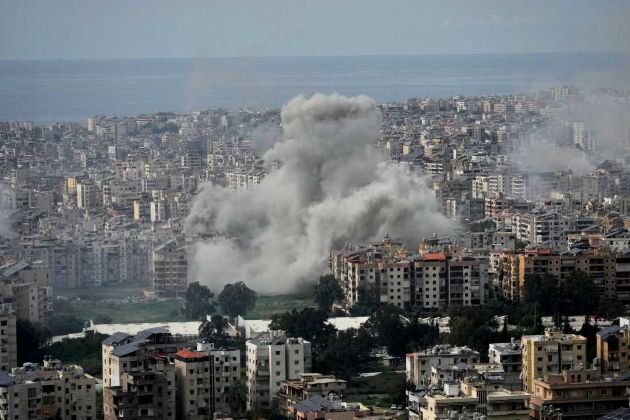
The World Bank’s latest Commodity Markets Outlook attributes the projected spike to escalating conflict in the Middle East, which has disrupted oil infrastructure and shipping routes, sending shockwaves through global commodity markets and compounding pressures already facing developing nations.
In this report, we examine the key developments, reactions from stakeholders, and the broader implications.
Background of the Story
The Global Energy Price Surge 2026 forecast comes against a backdrop of mounting geopolitical tensions and fragile post-pandemic recovery in many economies.
According to the World Bank, attacks on energy facilities and shipping disruptions in the Strait of Hormuz, a critical artery responsible for about 35 per cent of global seaborne crude oil trade, have triggered what it describes as the largest oil supply shock on record.
Initial disruptions slashed global oil supply by an estimated 10 million barrels per day, tightening markets and accelerating price volatility.
Brent crude prices, after retreating slightly from their recent peak, remained more than 50 per cent higher in mid-April compared to levels at the start of the year. The benchmark is forecast to average $86 per barrel in 2026, a sharp increase from $69 per barrel in 2025.
The Bank’s baseline scenario assumes the most acute disruptions ease by May and shipping through the Strait of Hormuz gradually returns to pre-war levels by late 2026.
Key Developments
Beyond oil, the Global Energy Price Surge 2026 is spilling over into other critical commodities.
Overall commodity prices are forecast to rise by 16 per cent in 2026, driven by soaring energy and fertilizer costs as well as record-high prices for key base metals.
Fertilizer prices are projected to jump 31 per cent next year, largely due to a 60 per cent surge in urea prices. This would push fertilizer affordability to its weakest level since 2022, squeezing farmers’ margins and threatening future harvests.
The World Bank warns that if the conflict drags on, up to 45 million additional people could fall into acute food insecurity this year, citing estimates from the World Food Programme.
Base metals such as aluminum, copper and tin are also expected to hit all-time highs, reflecting sustained demand from data centres, electric vehicles and renewable energy industries. Precious metals are forecast to climb 42 per cent on average in 2026, as investors seek safe-haven assets amid geopolitical uncertainty.
Inflationary pressures are already mounting. In developing economies, inflation is now projected to average 5.1 per cent in 2026 under baseline assumptions, up from 4.7 per cent last year and a full percentage point higher than pre-war forecasts.
Growth prospects are deteriorating as well. Developing economies are now expected to expand by 3.6 per cent in 2026, a downward revision of 0.4 percentage point since January. Economies directly impacted by conflict will suffer the most, while 70 per cent of commodity importers and more than 60 per cent of commodity exporters could record weaker-than-expected growth.
Reactions from Stakeholders
Indermit Gill, the World Bank Group’s Chief Economist and Senior Vice President for Development Economics, described the unfolding crisis as cumulative and deeply destabilizing.
“The war is hitting the global economy in cumulative waves: first through higher energy prices, then higher food prices, and finally, higher inflation, which will push up interest rates and make debt even more expensive,” Gill said.
He warned that the poorest households, which spend a disproportionate share of their income on food and fuel, will bear the brunt of the Global Energy Price Surge 2026.
“All of this is a reminder of a stark truth: war is development in reverse,” he added.
Ayhan Kose, the World Bank’s Deputy Chief Economist and Director of the Prospects Group, cautioned governments against broad fiscal interventions.
“The succession of shocks over the decade has sharply reduced the fiscal space available to respond to the current historic energy supply crisis,” Kose said. “Governments must resist the temptation of broad, untargeted fiscal support measures that could distort markets and erode fiscal buffers.”
Instead, he urged targeted, temporary assistance for the most vulnerable households.
Implications
For developing countries, including many in Sub-Saharan Africa, the Global Energy Price Surge 2026 presents a double-edged sword.
Commodity exporters may initially benefit from higher prices, but sustained volatility could undermine investment and planning. Commodity importers, meanwhile, face ballooning import bills, currency pressures and rising subsidy costs.
Higher oil prices will likely feed directly into transportation, electricity and food costs, further squeezing households already grappling with elevated living expenses.
Should hostilities escalate or supply disruptions persist, Brent crude could average as high as $115 per barrel in 2026. Under that scenario, inflation in developing economies could rise to 5.8 per cent this year, a level surpassed only in 2022 over the past decade.
Oil-price volatility during periods of geopolitical tension is roughly twice as high as during calmer times. A geopolitically driven 1 per cent decline in oil production can push prices up by an average of 11.5 per cent, the report notes.
Such volatility complicates monetary policy decisions, raises borrowing costs and further tightens global financial conditions.
What Happens Next
The trajectory of the Global Energy Price Surge 2026 hinges largely on the duration and intensity of the Middle East conflict.
If critical oil and gas facilities sustain further damage and export volumes are slow to recover, price pressures could intensify well beyond current forecasts.
Policymakers are expected to walk a delicate line between protecting vulnerable populations and preserving fiscal stability. Central banks, particularly in emerging markets, may face renewed pressure to keep interest rates elevated to contain inflation.
The iNews Times will continue to track developments in global commodity markets and assess their implications for Nigeria and other developing economies.
Conclusion
The Global Energy Price Surge 2026 is more than a spike in oil prices. It represents a cascading economic shock with far-reaching consequences for inflation, food security, fiscal stability and growth.
As conflict reverberates through energy markets and supply chains, the world confronts a familiar but dangerous reality: when geopolitics destabilizes commodities, the poorest pay the highest price.
For policymakers and households alike, the months ahead may prove decisive in determining whether this surge becomes a temporary disruption or a prolonged setback for global development.