US Security Assistance to Nigeria Questioned by Congressman Riley Moore.
West Virginia congressman urges Secretary of State to weigh alleged unmet conditions in FY26 and FY27 funding decisions.
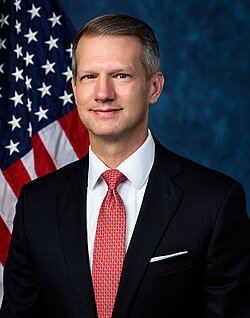
WASHINGTON, UNITED STATES – The iNews Times | US Security Assistance to Nigeria has come under renewed scrutiny after Congressman Riley Moore https://rileymoorehouse.gov criticised the administration of President Bola Tinubu, alleging failure to meet conditions attached to American security support.
Moore, who represents West Virginia’s 2nd District, made his position public in a post on X on Wednesday, urging US Secretary of State Marco Rubio to consider Nigeria’s compliance record when administering funding allocations for the 2026 and 2027 fiscal years.
In this report, we examine the key developments, reactions from stakeholders, and the broader implications.
Background of the Story
The United States provides Nigeria with security assistance that includes military training, equipment supply, intelligence cooperation, and counter-terrorism support aimed at combating insurgency, banditry, and organised crime.
Such assistance is approved by the US Congress and is typically tied to conditions. These conditions often require adherence to human rights standards, accountability in the use of funds, and demonstrable progress in addressing security threats.
The reference to FY26 and FY27 relates to the US fiscal calendar, which runs from October 1 to September 30. During these cycles, Congress determines foreign assistance allocations, including support for strategic partners such as Nigeria.
Moore’s comments follow earlier criticisms he made in November 2025, when he accused the Nigerian government of failing to justify billions of dollars in military aid while alleging persistent violence affecting Christian communities.
Key Developments
In his latest remarks, Moore stated that, in his view, the Tinubu administration had not lived up to the conditions placed on security assistance by the appropriations committee.
He urged Secretary Rubio to factor this assessment into decisions surrounding upcoming funding cycles, signalling the possibility of heightened congressional oversight.
Moore had previously warned that continued insecurity, particularly attacks he characterised as targeting Christians, demanded stronger action from Nigerian authorities.
He argued that despite years of US support through training and equipment provision, the crisis had persisted without what he described as sufficient response.
At the same time, the Federal Government of Nigeria has consistently rejected claims that the country’s security challenges amount to targeted religious persecution.
Officials maintain that violence in Nigeria affects both Christians and Muslims and stems from broader issues, including terrorism, criminal banditry, and communal conflicts.
Earlier this year, the Defence Headquarters affirmed that military cooperation with the United States does not undermine Nigeria’s sovereignty and comes at no cost to the country.
The military also confirmed the arrival of approximately 100 US personnel and associated equipment in February, describing the deployment as part of bilateral engagements designed to strengthen Nigeria’s capacity to address evolving threats.
A statement by the Director of Defence Information, Maj. Gen. Samaila Uba, noted that the collaboration aligns with Nigeria’s strategy to enhance operational effectiveness against insurgent and criminal networks.
Reactions from Stakeholders
Security analysts say the debate over US Security Assistance to Nigeria reflects broader geopolitical considerations.
A foreign policy expert who spoke to The iNews Times observed that “Congressional scrutiny of foreign aid is not unusual, especially where human rights and accountability concerns are raised. The real question is whether funding conditions will materially shift policy outcomes on the ground.”
Human rights advocates in Washington have long argued for stricter oversight mechanisms to ensure that assistance does not inadvertently enable abuses.
Conversely, Nigerian officials insist that security cooperation is mutually beneficial and essential to regional stability in West Africa.
A senior defence source noted that “Nigeria remains committed to transparent collaboration with international partners while safeguarding its sovereignty and constitutional order.”
Implications
The renewed scrutiny of US Security Assistance to Nigeria could have significant diplomatic and operational consequences.
If congressional concerns influence funding allocations for FY26 and FY27, Nigeria may face tighter reporting requirements, delayed disbursements, or conditional restructuring of assistance programmes.
Such developments could affect military training schedules, equipment procurement timelines, and intelligence-sharing arrangements critical to counter-terrorism operations.
Diplomatically, the exchange underscores the delicate balance between partnership and oversight in US-Nigeria relations. While both nations share strategic interests in combating extremism, perceptions of unmet conditions may strain bilateral confidence.
Domestically, the debate feeds into ongoing political discourse about governance, accountability, and the management of Nigeria’s security architecture.
What Happens Next
Attention will now turn to deliberations within the US Congress as lawmakers prepare budget frameworks for the upcoming fiscal years.
Secretary Rubio’s handling of foreign assistance allocations will be closely watched, particularly regarding how compliance benchmarks are assessed.
On the Nigerian side, officials are expected to continue diplomatic engagements aimed at reinforcing bilateral cooperation and clarifying progress made in addressing security challenges.
Observers note that while funding decisions ultimately rest with Congress, sustained dialogue between both governments could shape the tone and structure of future security cooperation.
Conclusion
The debate surrounding US Security Assistance to Nigeria highlights the complex intersection of foreign policy, human rights, and national security.
As congressional scrutiny intensifies, both Washington and Abuja face a critical moment in defining the future trajectory of their security partnership.
Whether the coming fiscal cycles bring expanded cooperation or stricter conditionality will depend on how convincingly Nigeria demonstrates compliance and how firmly US lawmakers press their concerns.
For now, the issue signals that security funding will not only be about strategy, but also about accountability and measurable results.