
Nigeria Insecurity Crisis: Reps Call for Immediate Action Against Bandits and Kidnappers.
Lawmakers warn that worsening attacks on schools, communities and places of worship demand urgent executive action to restore public confidence.
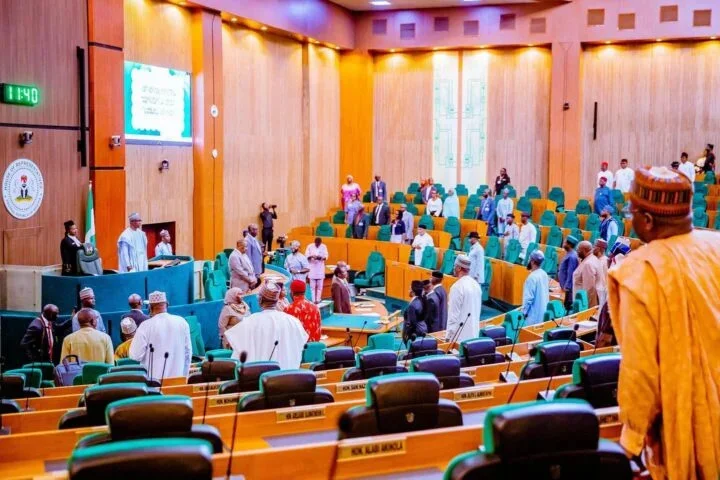
ABUJA, NIGERIA – The iNews Times | The Nigeria insecurity crisis took centre stage in the House of Representatives on Tuesday as lawmakers called on President Bola Tinubu to immediately deploy a comprehensive and aggressive security strategy to dismantle bandit and kidnapper networks operating across the country.
The lawmakers expressed deep concern over the escalating wave of banditry, mass abductions, attacks on schools and assaults on places of worship, warning that the growing insecurity is threatening lives, disrupting education, damaging economic activities and eroding public confidence in the nation’s security architecture.
In this report, we examine the key developments, reactions from stakeholders, and the broader implications.
Background of the Story
Nigeria has continued to grapple with multiple security challenges ranging from terrorism and banditry to kidnapping for ransom, communal violence and attacks on vulnerable communities.
In recent years, several states, particularly across the North-West, North-Central and North-East regions, have witnessed repeated attacks on schools, villages and religious centres. Mass abductions of students in Kaduna, Niger, Zamfara and other states have attracted widespread national and international attention, raising concerns about the safety of educational institutions and the future of thousands of children.
Beyond the humanitarian consequences, insecurity has severely affected economic activities, forcing farmers to abandon farmlands, disrupting local businesses and worsening poverty in many communities.
The continued attacks have also intensified calls for stronger and more coordinated security measures capable of addressing the root causes of violence while dismantling criminal networks responsible for the attacks.
Key Developments
The latest call for action followed the adoption of a motion of urgent public importance moved by Hon. Ibe Osonwa, who represents Arochukwu/Ohafia Federal Constituency of Abia State, during plenary.
Presenting the motion titled “A Call for Immediate Executive Action on the Surge in Banditry, the Daily Abduction of Schoolchildren, and the Perilous Security Situation in Nigerian Schools and Places of Worship,” Osonwa painted a troubling picture of the country’s worsening security environment.
The lawmaker reminded the Federal Government of its constitutional obligation to protect citizens, citing Section 14(2)(b) of the 1999 Constitution, which states that the security and welfare of the people shall remain the primary purpose of government.
He noted that persistent attacks on schools have contributed significantly to Nigeria’s out-of-school children crisis, with thousands of students unable to continue their education because of fears over safety.
According to him, many families remain traumatised by the abduction of loved ones, while communities continue to live under the threat of attacks from armed criminal groups.
Osonwa also raised concerns over what he described as the increasing targeting of schools and places of worship by bandits and kidnappers, warning that locations traditionally regarded as safe havens are becoming vulnerable to violent attacks.
Following deliberations, the House unanimously condemned the continued incidents of banditry, mass kidnappings and attacks on educational and religious institutions across the country.
The lawmakers subsequently resolved to send what they described as an urgent and solemn appeal to President Tinubu, urging him to deploy an aggressive, sustained and comprehensive security strategy capable of dismantling criminal strongholds, securing vulnerable communities and ensuring the unconditional release of citizens being held captive.
Reactions from Stakeholders
During the debate, Osonwa questioned the effectiveness of the country’s current security response despite substantial budgetary allocations to defence and security agencies.
He argued that the nation’s security architecture appears largely reactive rather than proactive, allowing criminal groups to maintain operational capacity in several parts of the country.
The lawmaker warned that the inability to decisively defeat bandits and terrorists risks creating the perception that the government is gradually losing control of certain territories.
In one of the strongest resolutions adopted during the session, the House stated that if the administration fails to significantly improve the security situation and restore public confidence within a reasonable timeframe, service chiefs should consider resigning honourably.
According to the lawmakers, public officials entrusted with national security must be held accountable for performance, particularly when the lives and livelihoods of citizens are under threat.
The House also directed its Committees on Defence, National Security and Intelligence, and Army to intensify oversight of the implementation of the resolutions and report back within two weeks for further legislative action.
Implications
The latest intervention by the lawmakers reflects growing concern within political circles over the persistence of insecurity despite ongoing military operations and security reforms.
The issue carries significant implications for education, agriculture, investment and national development.
Frequent attacks on schools have disrupted learning in several regions and contributed to rising numbers of out-of-school children, a challenge that continues to attract concern from development partners and education advocates.
Similarly, insecurity has forced many farming communities to abandon agricultural activities, contributing to food supply challenges and rising prices across the country.
The continued targeting of places of worship also raises concerns about freedom of religion and the ability of citizens to gather safely for spiritual and community activities.
Politically, the debate increases pressure on the Tinubu administration to demonstrate measurable progress in tackling insecurity, which remains one of the most critical issues confronting the nation.
What Happens Next
Attention will now turn to the executive arm of government and the security agencies responsible for implementing anti-banditry and anti-kidnapping operations.
The House committees assigned to monitor compliance with the resolutions are expected to engage relevant security institutions and assess progress over the coming weeks.
Stakeholders will also be watching closely to see whether new security initiatives, intelligence-driven operations and coordinated military actions are introduced in response to the lawmakers’ demands.
For many Nigerians living in affected communities, the expectation remains clear: stronger action that translates into improved security, safer schools and greater protection of lives and property.
Conclusion
The House of Representatives’ latest resolution underscores the growing urgency surrounding the Nigeria insecurity crisis and the demand for more decisive action against banditry, kidnapping and terrorism. As attacks continue to affect schools, places of worship and rural communities, lawmakers have placed fresh pressure on President Bola Tinubu and the nation’s security agencies to deliver results. Whether the latest intervention leads to a significant shift in security operations may determine not only public confidence in government but also the safety and stability of millions of Nigerians living under the shadow of insecurity.








![Fulani Herders Cut Plateau Farmer’s Hand After Dispute Over Fallen Cow [Photo]](https://inewstimes.com/wp-content/uploads/2026/09/Cattle-Grazing-350x250.webp)