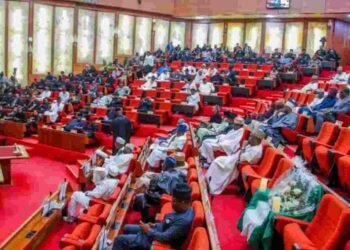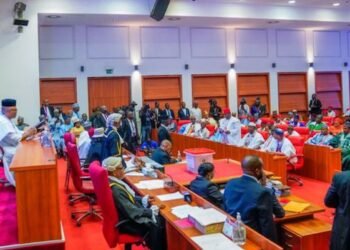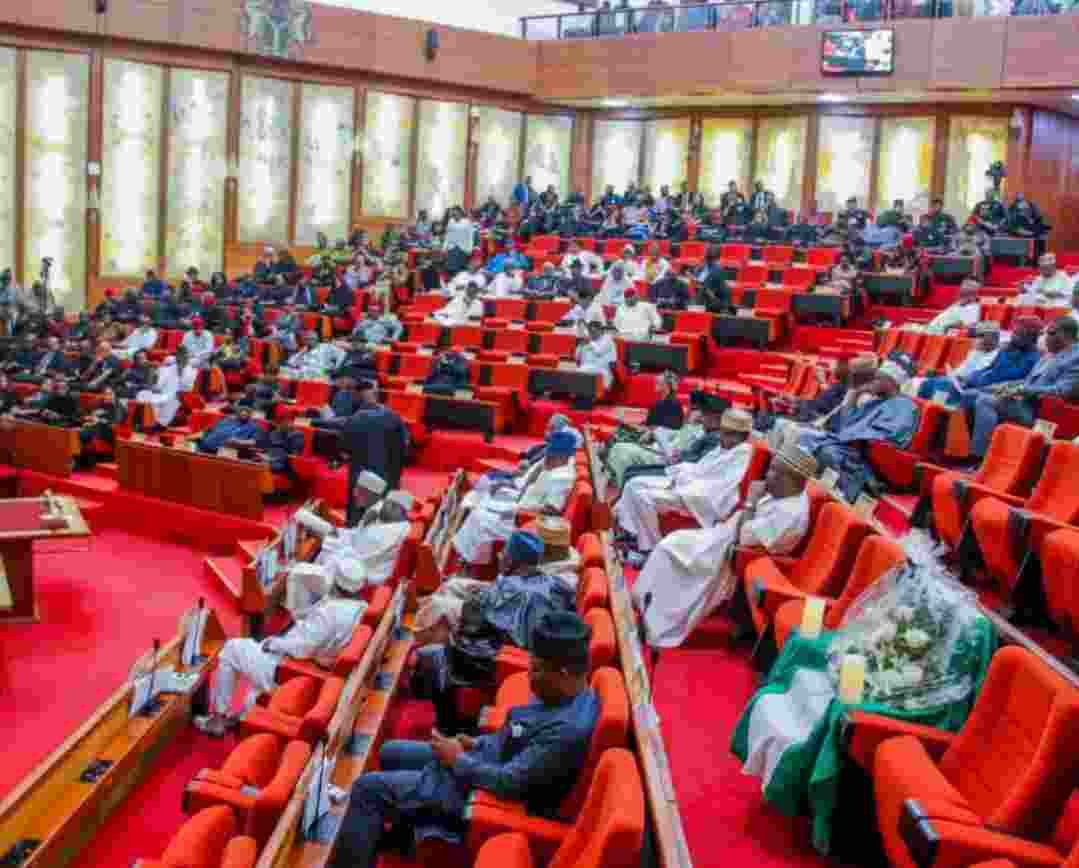
…the bill’s consideration sparked brief controversy after Malam Bashir Usman objected to the timing of the debate.
ABUJA, NIGERIA- The iNews Times| The House of Representatives has passed a constitutional amendment bill seeking to establish state police, marking a significant milestone in Nigeria’s ongoing efforts to reform its security architecture and address persistent insecurity across the country.
The bill, titled the Constitution of the Federal Republic of Nigeria (Sixth Alteration) Bill, 2026, passed third reading on Thursday after lawmakers adopted the report of the House Committee on the Review of the 1999 Constitution, chaired by Deputy Speaker Benjamin Kalu.
Out of the 290 members present during plenary, 289 voted in favour of the proposal, while only one lawmaker voted against it.
The legislation seeks to amend the 1999 Constitution to provide a legal framework for the creation, administration and operation of state police services alongside the existing federal policing structure.
Under the proposed amendment, the National Assembly would retain responsibility for prescribing the structure, organisation, powers and operational standards of the Federal Police while also setting minimum requirements for state police formations.
The bill stipulates that no state police force can commence operations unless it is established through legislation passed by the relevant State House of Assembly and certified as meeting national standards set by the National Assembly.
Until such state police organisations become operational, the Federal Police would continue to exercise policing responsibilities within affected states.
Federal Intervention Limited
The proposed law also defines circumstances under which the Federal Police may intervene in state security matters.
Such intervention would only occur where there is a complete breakdown of law and order beyond the capacity of a state police force, where a governor formally requests assistance, or where a state police organisation becomes unable to function due to administrative, financial or operational challenges.
The Federal Capital Territory would remain under the jurisdiction of the Federal Police.
New Appointment Structure
The bill introduces changes to the appointment and command structure of policing institutions.
Under the proposal, the Inspector-General of Police would be appointed by the President on the recommendation of the Nigeria Police Council from among serving officers of the Federal Police, subject to confirmation by the National Assembly.
Similarly, State Commissioners of Police would be appointed by governors on the advice of the Nigeria Police Council from among serving officers of their respective state police services and confirmed by State Houses of Assembly.
Governors would also have the authority to issue lawful directives to State Commissioners of Police on matters relating to public safety and law enforcement.
However, where a commissioner believes such directives are unlawful or inconsistent with professional policing standards, the matter may be referred to the Nigeria Police Council for a final decision.
Debate and Passage
The bill’s consideration sparked brief controversy after Malam Bashir Usman objected to the timing of the debate, arguing that lawmakers received the committee report too late for adequate review.
Responding, Speaker Tajudeen Abbas insisted that the worsening security situation required urgent legislative action.
Deputy Speaker Kalu, while presenting the report, described the proposal as a historic reform capable of strengthening local security systems and improving public safety.
Following the failure of the electronic voting system, lawmakers adopted a manual voting process, resulting in overwhelming support for the bill.
Abbas later described the passage as a decisive step toward creating a policing framework that is more responsive to local realities while preserving national unity.
Senate Advances Similar Bill
In a related development, the Senate passed for second reading a separate constitutional amendment bill seeking to establish state police and transfer certain policing responsibilities to sub-national governments.
The bill, sponsored by Senate Leader Opeyemi Bamidele, was referred to the Senate Committee on the Review of the Constitution, chaired by Deputy Senate President Barau Jibrin.
Leading the debate, Bamidele argued that Nigeria’s security challenges, including terrorism, banditry, kidnapping, cultism, armed robbery, pipeline vandalism and cybercrime, have exposed the limitations of the country’s centralised policing structure.
He said the proposal would move policing from the Exclusive Legislative List to the Concurrent Legislative List, allowing both federal and state governments to exercise constitutional authority over policing matters.
Bamidele maintained that decentralised policing would improve intelligence gathering, enhance public trust and enable quicker responses to security threats while allowing the Federal Police to focus on interstate crimes, terrorism and other national security concerns.
Several senators supported the bill, particularly lawmakers from regions heavily affected by insecurity.
Senate Chief Whip Mohammed Tahir Monguno argued that state police would provide a legal framework for regulating local vigilante groups and improving accountability.
However, Senator Adamu Aliero cautioned that constitutional procedures must be strictly followed, noting that any amendment would require approval by two-thirds of both chambers of the National Assembly and endorsement by at least 24 State Houses of Assembly.
For the state police proposal to become law, it must secure final approval from both chambers of the National Assembly, receive the backing of at least two-thirds of State Houses of Assembly and obtain presidential assent.
If successful, the amendment would introduce a multi-layered policing system in Nigeria, one of the most significant constitutional and security reforms since the country’s return to democratic rule in 1999.