Democracy Day Message: Tinubu Calls on Nigerians to Keep Faith in the Nation.
President tells citizens to remain committed to nation-building as Nigeria marks 27 years of uninterrupted democratic governance.
ABUJA, NIGERIA – The iNews Times | President Bola Tinubu has used his Democracy Day message to urge Nigerians not to lose faith in the country, even in moments of criticism, disagreement and frustration, insisting that democracy can only thrive when citizens continue to believe in the nation and its institutions.
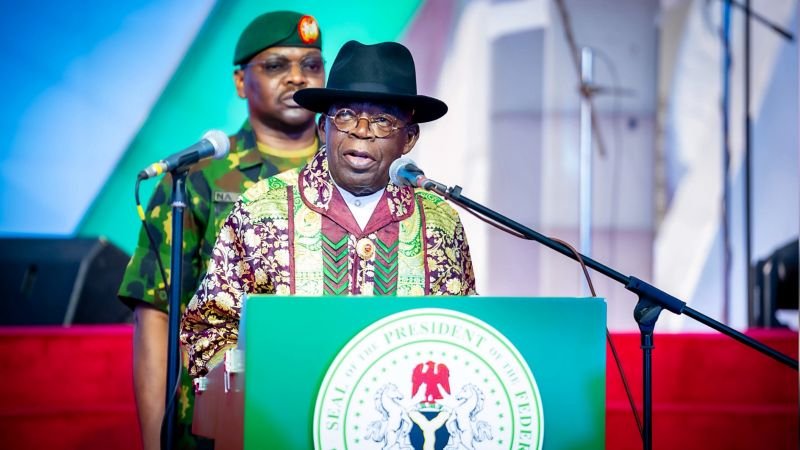
The President made the appeal on Friday during his nationwide broadcast commemorating Nigeria’s 27th anniversary of uninterrupted democratic rule, describing the country’s democratic journey as a collective effort that must be protected and strengthened by every citizen regardless of political differences.
In this report, we examine the key developments, reactions from stakeholders, and the broader implications.
Background of the Story
Nigeria’s Democracy Day remains one of the most important milestones in the country’s political history, symbolizing the end of prolonged military rule and the return to civilian governance in 1999.
The day was originally observed on May 29 to mark the inauguration of elected leaders, but it was moved to June 12 in recognition of the historic 1993 presidential election widely regarded as one of the freest and fairest in Nigeria’s history.
For many Nigerians, the annual commemoration serves as a reminder of the sacrifices made by pro-democracy activists and the importance of preserving democratic institutions.
Over the years, however, Democracy Day celebrations have also become moments for reflection on governance, economic hardship, insecurity, unemployment and public trust in leadership.
This year’s anniversary comes at a time of growing national debate over economic reforms, rising living costs and increasing calls for accountability from government.
Key Developments
In his address to the nation, President Tinubu acknowledged that criticism and disagreement are natural parts of democratic governance, but warned that losing faith in the country itself could weaken the democratic system.
“Criticise me, disagree with me, but never stop believing in the nation,” Tinubu said during the broadcast.
He stressed that democracy depends on public trust and active participation, pointing to the National Assembly https://nass.gov.ng, the judiciary, the press and civil society as critical institutions that serve as the guardrails of the democratic process.
The President also used the opportunity to speak directly to Nigeria’s youth, urging them to remain in the country and contribute to its development rather than giving up on its future.
“To our young people, Nigeria is your home and your future. Build here, work here, and eat here,” he said.
He further encouraged young Nigerians to see themselves as part of the solution to the nation’s challenges.
“Every great nation was built by those who stayed to solve problems, not by those who abandoned ship,” he added.
Tinubu also extended appreciation to members of the armed forces, the police and intelligence agencies for what he described as their sacrifices in protecting the country.
He equally acknowledged the roles played by traditional rulers, religious leaders and community heads in promoting peace, reconciliation and stability across the federation.
Reactions from Stakeholders
Though immediate official reactions to the broadcast were still emerging, political analysts say the President’s remarks reflect an attempt to strengthen public confidence amid difficult economic and social realities.
A political affairs analyst based in Abuja said the President’s message was timely, particularly in addressing the frustrations of young Nigerians.
“At a time when many young Nigerians are considering leaving the country due to economic pressure, such a message is significant. But beyond words, citizens will be expecting policies that match the rhetoric,” the analyst said.
Civil society groups have repeatedly stressed that while democracy allows criticism, government must also remain responsive to the concerns of citizens, especially on issues of insecurity, inflation and unemployment.
Observers note that Tinubu’s emphasis on democratic institutions comes at a critical time when public trust in governance structures is under intense scrutiny.
Implications
Tinubu’s Democracy Day message carries both political and social significance.
Politically, it signals an effort by the administration to consolidate support and encourage patience as his government continues implementing reforms.
Socially, the message speaks to growing concerns over youth migration, commonly referred to as “Japa,” as thousands of Nigerians continue seeking opportunities abroad due to economic uncertainties.
His call for young people to “build here” could become a defining message of his administration if backed by concrete improvements in job creation, security and infrastructure.
The President’s acknowledgment of criticism also reinforces the democratic principle of freedom of expression, an important signal in a political climate where citizens increasingly demand transparency and accountability.
What Happens Next
Attention will now shift to how the Tinubu administration translates its Democracy Day message into practical governance outcomes.
Many Nigerians will be watching closely to see whether promises of reform and national rebuilding are matched by improved economic conditions, stronger institutions and better security.
Political stakeholders are also expected to continue assessing the President’s performance as the administration advances into the next phase of its governance agenda.
For young Nigerians especially, the coming months may determine whether the President’s appeal to stay and build the country resonates beyond rhetoric.
Conclusion
President Bola Tinubu’s Democracy Day message was both a call for national unity and a reminder of the responsibilities that come with democratic governance. While urging Nigerians to criticise leadership where necessary, he emphasized the importance of maintaining faith in the nation itself. As Nigeria marks 27 years of uninterrupted democracy, the challenge ahead remains not just preserving democratic institutions, but ensuring they deliver meaningful progress, justice and prosperity for the people.