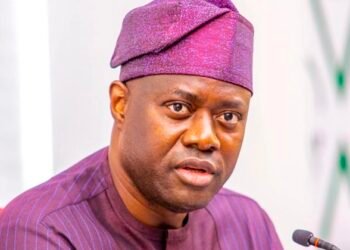
2027 Elections: Rufai Oseni Warns Northern Discontent Could Undermine APC Chances.
Arise TV host says money and public praise in the North mask deeper voter unhappiness that may reshape the next presidential race.
LAGOS, NIGERIA — The iNews Times | Arise Television presenter Rufai Oseni has issued a stark warning that voters across Northern Nigeria remain deeply dissatisfied with President Bola Tinubu’s administration, insisting that the 2027 elections could deliver an unpleasant surprise for the ruling All Progressives Congress https://apc.com.ng if the party continues to misread the region’s true mood.
Speaking on Arise Television’s Morning Show on Monday, Oseni argued that the enthusiastic crowds and public endorsements some politicians receive in the North should not be mistaken for genuine approval of the Federal Government. He maintained that financial inducements and orchestrated displays of support often fail to convert into actual votes when citizens enter the polling booth.
In this report, we examine the key developments, reactions from stakeholders, and the broader implications.
Background of the Story
Northern Nigeria has long been a decisive battleground in national elections. President Tinubu’s 2023 victory relied significantly on votes from the region, yet economic hardships, insecurity, and policy outcomes since then have tested that support. Meanwhile, the Peoples Democratic Party has suffered fragmentation, prompting several governors and senior figures to defect to the APC. These realignments have been celebrated by the ruling party as evidence of growing strength, but questions linger about their depth and durability ahead of 2027.
Key Developments
Oseni based his assessment on continuous observation of public sentiment and political developments across the North rather than a single formal survey. He acknowledged that his position risks accusations of hasty generalisation but insisted it reflects a consistent reading of the region’s trajectory.
He was particularly sceptical about the loyalty of governors who recently joined the APC after the PDP’s internal crisis. According to him, many of these defections were driven more by the collapse of their former platform than by any deep ideological commitment to the ruling party. “It is a strange marriage arrangement,” Oseni said. “They just had to come to the APC, not because if they had a choice, if their own party was not disintegrated… do you think they’re going to come?”
He warned that such political marriages may not produce the full electoral commitment the APC expects. “Will the APC be able to trust the complete commitments of the governors that came to the fold of the APC because of the disintegration of the PDP? That’s another factor.”
Oseni’s most pointed message was directed at politicians who believe cash and public praise guarantee victory. “Do not deceive yourself,” he declared. “Politicians are the most delusional and the most optimistic people on earth. Because you are giving tonnes of people money in the North they are shouting your name, they are saying everything is well. Elections will shock you. Do not deceive yourself. The North is not happy with this administration.”
Reactions from Stakeholders
While Oseni’s remarks have sparked discussion among political analysts, they align with growing offline conversations in parts of the North about the cost of living, insecurity, and the perceived gap between government promises and lived realities. APC figures have previously dismissed similar concerns as opposition talking points, pointing instead to infrastructure projects and economic reforms. Opposition voices, however, are likely to seize on Oseni’s comments as validation of their claims that the ruling party’s Northern base is softer than it appears.
Implications
The warning carries weight because Northern votes remain decisive in any presidential calculation. If dissatisfaction is as widespread as Oseni suggests, the APC’s strategy of absorbing defectors and deploying resources may prove insufficient. A genuine erosion of support could open space for a stronger opposition challenge or force the ruling party into difficult concessions. The comments also highlight a recurring tension in Nigerian politics: the difference between elite realignments and mass voter sentiment.
What Happens Next
Attention will now turn to how both the APC and opposition parties respond in the coming months. The ruling party is expected to intensify grassroots engagement and showcase achievements in the North. Opposition groups will likely amplify narratives of hardship and unfulfilled expectations. Public sentiment analyses and early opinion trends will be closely watched as the 2027 campaign season approaches. Governors who recently switched parties will face particular scrutiny over whether their structures deliver votes or merely rhetoric.
Conclusion
Rufai Oseni’s assessment serves as an early caution for the political class. The 2027 elections will ultimately be decided by citizens, not by the volume of money distributed or the number of governors who cross the carpet. For the APC, underestimating Northern discontent could prove costly. For the opposition, converting that discontent into organised electoral strength remains the greater challenge. As The iNews Times continues to track developments, one reality is already clear: the mood of the North will be decisive, and surface applause may not survive the ballot box.