ADC Crisis: NDC Warns Judiciary Against Political Interference After High Court Ruling.
Opposition party says High Court ruling on David Mark-led leadership risks weakening multiparty democracy ahead of 2027 elections.
ABUJA, NIGERIA — The iNews Times | The Nigeria Democratic Congress has issued a strong caution to the judiciary against any form of political interference following a Federal High Court judgment that nullified the David Mark-led leadership of the African Democratic Congress https://adc.org.ng, intensifying the ongoing ADC crisis.
In a statement released on Friday, the NDC said the ruling risks creating the dangerous impression that the courts are being deployed to weaken opposition parties and undermine democratic competition less than a year before the 2027 general elections.
In this report, we examine the key developments, reactions from stakeholders, and the broader implications.
Background of the Story
The African Democratic Congress has faced recurring leadership disputes in recent years. Ralph Nwosu’s resignation as National Chairman created a vacuum that David Mark, the former Senate President, moved to fill. The party later conducted processes that produced former Vice-President Atiku Abubakar as its presidential candidate for 2027. Nafiu Bala Gombe, a former Deputy National Chairman (North-East), challenged Mark’s emergence in court, insisting that the party’s constitution and the Electoral Act required a different succession path. The dispute reached the Federal High Court in Abuja at a time when opposition parties are under intense pressure to consolidate ahead of the next electoral cycle.
Key Developments
On November 5, 2026, Justice Peter Lifu of the Federal High Court in Abuja delivered judgment in the suit filed by Nafiu Bala Gombe. The court ruled that the emergence of the David Mark-led National Working Committee violated the ADC constitution, the Electoral Act and the 1999 Constitution. It nullified the Mark leadership and all decisions and actions taken under it, including the presidential primary that produced Atiku Abubakar. The court further directed the Independent National Electoral Commission not to recognise those decisions. Both the ADC and Atiku have rejected the judgment and signalled their intention to appeal.
Reactions from Stakeholders
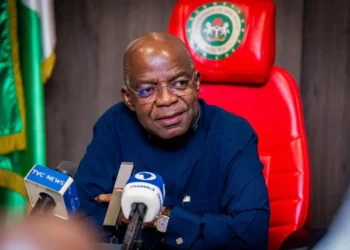
The Nigeria Democratic Congress responded swiftly through its National Publicity Secretary, Osa Director. “We have noted the Federal High Court judgment derecognising the David Mark-led leadership of the African Democratic Congress,” he said. “While we respect the judiciary as the last hope of the common man, we are concerned that judgments of this nature, if not carefully handled, risk creating the impression that the courts are being used to scuttle democracy and weaken opposition.”
Director went further: “The way some of these judgements are being churned out, especially from the High Courts, suggests a deliberate effort to shut out the ADC from the forthcoming general elections by other means. This would amount to further shrinking the chances of multi-party democracy, which is already under a big threat under the APC-led government of President Bola Ahmed Tinubu.” The NDC urged the ADC to challenge the ruling at the Court of Appeal without delay and called on the appellate court to grant accelerated hearing given the approaching 2027 polls.
Implications
The judgment arrives at a sensitive moment in Nigeria’s democratic calendar. Opposition parties already operate under constrained political space. A prolonged leadership crisis within the ADC could fragment its structures, discourage potential alliances and reduce the range of credible alternatives available to voters in 2027. Legal uncertainty over party leadership also places INEC in a difficult position and fuels public suspicion that judicial processes may be drawn into partisan contests. For the judiciary itself, successive high-profile party leadership rulings raise questions about consistency, timing and institutional independence issues that go to the heart of public trust.
What Happens Next
The ADC is expected to file an appeal in the coming days. The NDC has called for accelerated hearing so that uncertainty does not linger into the election year. Legal observers will watch whether the Court of Appeal prioritises the matter and how INEC responds pending the final determination. Political stakeholders will also monitor whether other opposition platforms face similar legal challenges in the months ahead.
Conclusion
The ADC crisis is no longer merely an internal party dispute. It has become a test of how Nigeria’s democratic institutions manage opposition space ahead of a critical election cycle. As The iNews Times continues to track developments, the manner in which the appellate process unfolds will signal whether the system prioritises legal clarity and multiparty competition or allows uncertainty to weaken the opposition further. The integrity of the judiciary and the health of Nigeria’s democracy both hang in the balance.