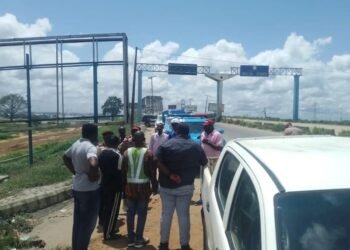
FRSC Anambra Road Safety Advocacy Gains Momentum as Command Targets Ember Months Crash Risks.
Sector Commander leads multi-location campaign to curb speeding, vehicle defects and reckless behaviour across markets and parks.
AWKA, Nigeria — The iNews Times | FRSC Anambra road safety advocacy has been sharply intensified by the Federal Road Safety Corps https://www.frsc.gov.ng Anambra State Sector Command as the high-risk Ember Months period of 2026 gets underway, with teams engaging drivers, traders and passengers in a coordinated push to reduce road traffic crashes.
Corps Commander Bridget Asekhauno personally led the latest round of outreach at Eke and Amawbia markets as well as several major motor parks, while also taking the message live to radio listeners, underscoring the Command’s determination to change behaviour before the festive travel peak claims more lives.
In this report, we examine the key developments, reactions from stakeholders, and the broader implications.
Background of the Story
Ember Months, spanning September to December, traditionally record elevated road crash figures across Nigeria as families travel, commercial activity surges and drivers face longer hours on increasingly congested routes. Anambra State, a major commercial and transit corridor in the South-East, has long featured among areas requiring sustained intervention. The Federal Road Safety Corps’ 2026 Corporate Strategic Goal prioritises measurable reductions in fatalities and injuries through enforcement, education and stakeholder partnerships. Against this backdrop, the Anambra Sector Command has escalated its public enlightenment drive beyond routine patrols to direct engagement at the points where risk is highest.
Key Developments
The advocacy team under Corps Commander Bridget Asekhauno moved through Eke and Amawbia markets, addressing market executives on the dangers of roadside trading, indiscriminate parking and the failure to use designated pedestrian crossings. Traders and other road users were reminded that caution around busy thoroughfares is non-negotiable if collisions involving pedestrians are to be minimised.
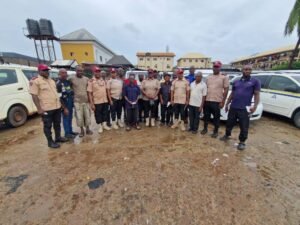
At Rivers Joy Park, Royal Mass, Star Sunny Park, Peace Park, Capital Motor Parks and Tracas, commercial drivers and transport operators received firm guidance on vehicle roadworthiness. Particular stress was placed on routine checks of brakes, tyres, lights, wipers and other critical components before any journey. The message was clear: defective vehicles remain a leading contributor to preventable crashes.
On 22 September 2026 the Sector Commander took the campaign to the airwaves via a live audience-participation programme on KPAKPANDU 101.9 FM, Mbaukwu. Hosted by Mr Franklin, the broadcast allowed Corps Commander Asekhauno to outline the statutory responsibilities of the FRSC road traffic management, law enforcement, public enlightenment, rescue operations and crash reduction while answering listeners’ questions directly. She repeatedly urged road users to maintain lane discipline, avoid distractions, shun speeding and dangerous overtaking, reject route violations and never drive under the influence of alcohol or drugs.
Reactions from Stakeholders
Corps Commander Bridget Asekhauno told listeners and those engaged at the parks that collective responsibility remains the only sustainable path to safer roads. “Every road user must prioritise the safety of passengers and other road users. The FRSC cannot succeed alone; the public must support these efforts if we are to create a safer motoring environment in Anambra State and Nigeria at large,” she stated during the radio interaction.
Sector Public Education Officer SRC Margaret B. Onabe, who coordinated the public information aspects of the exercise, reinforced the Command’s standing invitation for continuous partnership. Market executives and park operators present at the sessions expressed appreciation for the direct engagement, noting that practical advice delivered on site carries more weight than distant circulars.
Implications
The stepped-up FRSC Anambra road safety advocacy carries significance beyond immediate compliance. Reduced crash rates protect commercial productivity on a vital South-East corridor, ease pressure on emergency services and hospitals, and limit the economic and emotional toll on families. Sustained public buy-in also strengthens the Corps’ ability to enforce traffic laws more effectively, creating a virtuous cycle of safer behaviour and fewer fatalities. In a state where transport underpins both local trade and inter-state movement, these interventions speak directly to economic resilience and public confidence.
What Happens Next
The Anambra State Sector Command has signalled that stakeholder engagement, public enlightenment and proactive interventions will continue throughout the Ember Months and beyond. Motorists and transport operators can expect further visibility at parks, markets and on local media. The public is reminded that the FRSC toll-free emergency line 122 remains available around the clock for any incident on the roads.
Conclusion
By taking FRSC Anambra road safety advocacy into markets, motor parks and radio studios in a single coordinated push, the Sector Command has demonstrated that prevention remains cheaper and far more humane than response after the fact. As travel intensifies in the months ahead, the message from Corps Commander Bridget Asekhauno and her team is unambiguous: safer roads are a shared responsibility, and every compliant journey counts. The iNews Times will continue to track the impact of these efforts as the 2026 Ember Months unfold.