…the Boko Haram logistics network busted in Borno has again underscored the complexity of insurgency operations.
MAIDUGURI, Nigeria — Boko Haram Logistics Network Busted in Borno State as troops of the Nigerian Army arrested 13 suspected members of a supply chain linked to insurgents operating in the North-East.
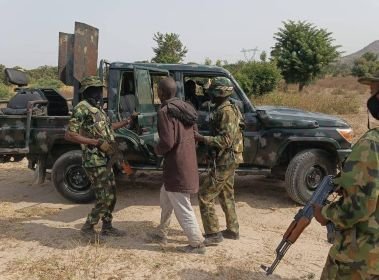
The iNews Times gathered that the suspects were apprehended during a routine stop-and-search operation conducted by troops of Bravo Company, 159 Battalion, in the Kanama area of Borno State.
Security analyst Zagazola Makama disclosed the development in a post shared on X on Friday, detailing how the operation unfolded and the items recovered from the suspects.
How the Arrest Happened
According to the report, the operation occurred at about 7:00 p.m. on April 2, when troops intercepted a Toyota pickup vehicle heading towards Dekwa.
Inside the vehicle were 13 occupants, 12 men and one woman whose movements reportedly raised suspicion during the security check.
Further search of the vehicle reportedly led to a major breakthrough, reinforcing intelligence claims that a Boko Haram logistics network busted in Borno had been under surveillance.
Security sources revealed that two of the male suspects were discovered with gunshot wounds during the search.
Gunshot Wounds Raise Suspicion
Preliminary findings indicated that the injured individuals were allegedly part of a logistics support structure supplying Boko Haram fighters.
Reports suggest that the two suspects sustained their injuries a day earlier during a confrontation between troops and suspected insurgents along the Usmadi axis.
Military sources indicated that troops had engaged suspected terrorists who were reportedly transporting supplies to a camp located in Dekwa. It is believed the injured suspects were part of that supply chain.
The discovery of the wounded men inside the vehicle strengthened suspicions that the operation had successfully disrupted a Boko Haram logistics network busted before it could deliver critical supplies.
Items Recovered During Operation
Among the items recovered were eight torchlight mobile phones.
Security experts note that such devices are commonly used by insurgent groups in remote locations where electricity access is limited and communication must be maintained discreetly.
The recovered phones are expected to play a key role in ongoing investigations, potentially helping authorities trace communication links, financial sponsors, and other members of the network.
All 13 suspects, along with the intercepted vehicle, are currently in military custody.
What This Means for Counter-Insurgency Operations
The arrest represents another tactical gain in the Nigerian military’s sustained counter-insurgency efforts in Borno State and the broader North-East region.
While much attention is often placed on direct combat engagements, security analysts emphasize that dismantling logistics networks is equally critical in weakening insurgent operations.
Without supply routes for food, fuel, medical items, and communication equipment, terrorist groups face operational setbacks.
The fact that a Boko Haram logistics network busted operation occurred during a routine stop-and-search exercise highlights the importance of intelligence-driven patrols and consistent security presence.
Military authorities have continued to intensify surveillance along key movement corridors in Borno, particularly routes suspected to be used for transporting supplies to insurgent camps.
Borno: Epicentre of Insurgency
Borno State has remained the epicentre of insurgency activities in Nigeria for over a decade.
Although military offensives in recent years have degraded Boko Haram’s territorial control, remnants of the group continue to operate through asymmetric tactics, including ambushes, improvised explosive devices (IEDs), and coordinated supply movements.
Security observers say disrupting logistics channels is essential to preventing regrouping efforts by insurgent factions.
The latest operation in Kanama suggests continued vigilance by troops operating under challenging terrain and security conditions.
Next Steps in Investigation
Sources indicate that the suspects will be handed over to higher military authorities for further profiling and investigation.
Authorities are expected to conduct detailed interrogations to determine the structure of the network, funding sources, communication channels, possible collaborators, the intended destination of the intercepted supplies.
If confirmed, the arrests could provide actionable intelligence for follow-up operations targeting additional cells.
The development that a Boko Haram logistics network busted in Borno has again underscored the complexity of insurgency operations, where supply chains play a central role.
Security Experts React
Security analysts say targeting logistics disrupts insurgent resilience.
According to counter-terrorism observers, insurgent groups rely heavily on covert civilian transportation methods to evade detection.
The interception of the Toyota pickup vehicle demonstrates how routine patrols can produce high-impact outcomes when combined with timely intelligence.
Renewed Focus on Supply Routes
The North-East has seen increased military operations aimed at cutting off insurgent mobility.
Strategic areas such as Dekwa and the Usmadi axis have reportedly been under close watch due to intelligence suggesting repeated supply movements through those corridors.
The successful operation further reinforces the military’s commitment to degrading operational capabilities of insurgent groups through sustained pressure.
For residents in Borno communities affected by years of insurgency, the news of a Boko Haram logistics network busted offers cautious optimism.
However, security experts warn that continued vigilance remains necessary, as insurgent groups often attempt to re-establish supply channels after setbacks.