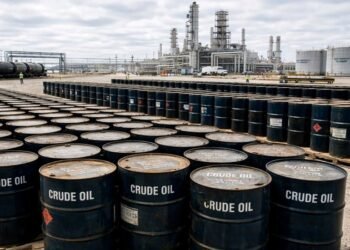
Crude Oil Prices Retreat After Monday Spike as Nigerian Marketers Reduce Pump Prices.
Global market cooling follows US rejection of Iran truce, delivering relief at Nigerian pumps.
LAGOS, NIGERIA — The iNews Times | Crude oil prices retreated on Tuesday after a sharp climb the previous day, easing pressure on global energy markets and prompting fresh reductions in retail fuel prices across Nigeria. Brent crude settled at $105 per barrel while West Texas Intermediate, WTI, closed at $92, reversing gains that had pushed Brent as high as $107 amid geopolitical friction.
The pullback comes after reports that United States President Donald Trump rejected Iran’s proposal for a seven-day truce, a development that had driven prices higher over the weekend and into Monday. In Nigeria, Dangote Refinery, MRS and several other marketers responded by cutting pump prices by between N20 and N25 per litre, offering motorists a measure of relief in an economy still sensitive to energy costs.
In this report, we examine the key developments, reactions from stakeholders, and the broader implications.
Background of the Story
Oil markets have remained volatile throughout the year as diplomatic tensions between Washington and Tehran continue to influence supply expectations. At the 81st United Nations General Assembly https://www.un.org, Iranian authorities floated a short-term peace proposal aimed at de-escalating regional risks. The offer was swiftly dismissed by President Trump, who told reporters outside the White House, “I reject their proposal.” That public rejection triggered a swift upward reaction in crude benchmarks over the weekend.
Nigeria, as a major oil producer and consumer, feels these global swings almost immediately. The successful ramp-up of Dangote Refinery has altered the domestic pricing landscape, reducing the country’s reliance on imported refined products and giving local marketers greater flexibility to adjust pump prices in response to international crude movements.
Key Developments
A market survey conducted on Tuesday confirmed the retreat in global benchmarks. Brent crude eased to $105 per barrel and WTI settled at $92, erasing much of Monday’s spike. Traders attributed the cooling to profit-taking and a reassessment of immediate supply risks following the initial reaction to the White House comments.
In Nigeria, the impact registered quickly at the retail level. Dangote Refinery, MRS and other filling stations implemented price reductions ranging from N20 to N25 per litre. The cuts were observed across major urban centres, providing a tangible benefit to commercial transporters and private motorists who have faced elevated operating costs for much of the year.
Reactions from Stakeholders
Industry observers welcomed the domestic price adjustments. A senior official at a major marketing company, speaking on condition of anonymity because he was not authorised to comment publicly, told The iNews Times: “When international crude softens and local refining capacity is strong, we are able to pass some of that relief to consumers without waiting for official directives. This is how a functional downstream sector should operate.”
Energy analysts also noted the significance of the timing. “The rejection of the Iranian proposal created a short-lived risk premium,” said a Lagos-based petroleum economist. “Once the market absorbed the news, prices corrected. Nigeria’s growing refining capacity means these global corrections now translate into faster local price responses than in previous years.”
Implications
The dual movement – lower global crude oil prices and domestic fuel price cuts carries clear economic weight for Nigeria. Cheaper petrol and diesel reduce transportation costs, which in turn can ease pressure on food prices and general inflation. For households and businesses already navigating a challenging cost environment, even modest reductions at the pump provide breathing room.
Politically, the development strengthens the narrative around domestic refining capacity. Dangote Refinery’s ability to influence retail prices independently of imported product costs marks a structural shift that successive governments have sought for decades. Sustained lower prices could also improve public sentiment ahead of any future electoral cycles, though analysts caution that oil markets remain highly sensitive to further geopolitical developments.
What Happens Next
Market participants will closely watch for any fresh diplomatic signals from Washington or Tehran that could reintroduce volatility. In Nigeria, marketers are expected to continue monitoring international benchmarks and adjust prices accordingly, particularly if the current downward trend in crude oil prices holds.
Further reductions remain possible if global prices stabilise below recent peaks, though any renewed escalation in the Middle East could quickly reverse the gains. Regulatory authorities are also likely to keep a close eye on pump price compliance to ensure the benefits reach consumers across the country.
Conclusion
The retreat in crude oil prices after Monday’s spike has delivered welcome relief to Nigerian motorists and transporters at a time when energy costs remain a central concern for households and businesses. The swift response by Dangote Refinery, MRS and other stations underscores the growing influence of local refining capacity on domestic fuel pricing. As global markets continue to navigate geopolitical uncertainty, The iNews Times will keep tracking both the international benchmarks and their direct impact on Nigerian pumps, providing readers with clear, timely analysis of developments that affect everyday life and the broader economy.