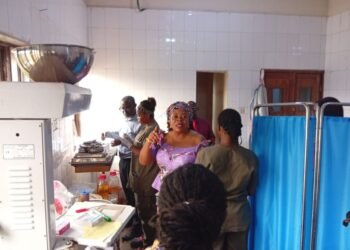
HIV Prevention Injection Rollout Targets Reduction of New Infections in Anambra.
Health Authorities Introduce Twice-Yearly HIV Prevention Injection to Reduce New Infections Across the State.
AWKA, NIGERIA – The iNews Times | HIV Prevention Injection Rollout has officially commenced in Anambra State following the launch of a long-acting injectable designed to prevent HIV infection among high-risk populations and vulnerable groups across the state.
The injectable medication, known as LENACAPAVIR (LEN PrEP), is expected to strengthen HIV prevention efforts by offering protection through a twice-yearly injection administered free of charge at selected health facilities across Anambra.
The intervention, sponsored by The Global Fund in partnership with the National AIDS, Viral Hepatitis and STIs Control Programme (NASCP) https://nascp.gov.ng and the State AIDS, Viral Hepatitis and STIs Control Programme (SASCP), was formally flagged off at the Chukwuemeka Odumegwu Ojukwu University Teaching Hospital (COOUTH), Amaku Awka.
In this report, we examine the key developments, reactions from stakeholders, and the broader implications.
Background of the Story
Nigeria has continued to intensify efforts aimed at reducing HIV transmission rates through improved testing, treatment access, public awareness campaigns, and preventive healthcare strategies.
In recent years, global health organisations have increasingly promoted long-acting injectable HIV prevention medications as a more effective and convenient alternative to daily oral preventive drugs, especially among populations with higher exposure risks.
Anambra State has remained one of the states facing notable HIV prevalence concerns within the South-East region, prompting authorities to strengthen prevention-focused interventions.
Health experts believe prevention strategies remain critical in reducing the long-term social, economic, and public health burden associated with HIV/AIDS.
Key Developments
Speaking during the official launch ceremony, Anambra State Commissioner for Health, Dr. Afam Obidike, said the state government was prioritising preventive healthcare measures as part of broader efforts to eliminate HIV infections in the state.
He explained that the state’s relatively high HIV prevalence figures partly reflect increased public awareness and regular testing among residents.
According to him, the HIV Prevention Injection Rollout would significantly improve protection for individuals and communities considered vulnerable to HIV exposure.
Dr. Obidike also commended Governor Chukwuma Soludo for creating an enabling environment for health interventions and supporting partnerships aimed at improving healthcare delivery in the state.
He, however, warned against attempts to commercialise or divert the medication for private interests.
“The object of action of this drug is two weeks. Those exposed take it within zero to 72 hours, meaning that it started acting between one to two weeks,” he stated.
The injectable HIV prevention medication will be available at COOUTH Amaku Awka, Federal Medical Centre Onitsha, Trauma Centre Oba, Comprehensive Health Centre Ukpo, Comprehensive Health Centre Neni, and OSS Awka.
The flag-off ceremony attracted representatives from the World Health Organisation (WHO), Anambra State Agency for the Control of AIDS (ANSACA), National Action Committee on AIDS (NACA), and the Network of People Living with HIV/AIDS in Nigeria, among others.
Also speaking during the event, Chief Medical Director of COOUTH, Dr. Maureen Umeakuewulu, described the programme as timely and necessary, especially amid growing HIV prevalence among adolescents and young adults.
She expressed optimism that the intervention would significantly reduce new HIV infections in Anambra and Nigeria generally.
“For me, it’s not only for high-risk populations, but for everybody. Prevention is very important,” she stated.
Dr. Umeakuewulu further appreciated President Bola Ahmed Tinubu for selecting Anambra among the eight states chosen for the national rollout of the programme.
Presenting data on HIV prevalence in Anambra State, the State AIDS Programme Coordinator, Dr. Tonia Mbagwu, disclosed that Anambra currently records the highest HIV prevalence rate in the South-East region at 2.4 percent.
According to her, approximately 97,429 persons are currently living with HIV in the state.
She added that 176 health facilities provide comprehensive HIV services while 1,968 facilities offer different categories of HIV-related healthcare services across the state.
Dr. Mbagwu explained that LEN PrEP is a preventive medication administered to individuals exposed to HIV within a 72-hour window and also serves as a long-term preventive option for vulnerable populations.
She noted that before the introduction of injectable prevention therapy, oral HIV prevention medication taken daily had been the major preventive option.
“Now, we have the injectable which is taken twice yearly, every six months,” she explained.
According to her, the programme primarily targets high-risk populations, including sex workers, transgender persons, same-sex partners, and discordant couples where one partner is HIV-positive while the other is not.
She also stressed that the injectable does not prevent other sexually transmitted infections such as Hepatitis B or Candidiasis, urging residents to maintain dual protection measures including condom use.
Reactions from Stakeholders
The HIV Prevention Injection Rollout has generated positive reactions among healthcare professionals, HIV advocates, and public health stakeholders in Anambra State.
Some health experts described the intervention as a major advancement in HIV prevention efforts capable of improving adherence and reducing infection rates among vulnerable groups.
A public health advocate who spoke to The iNews Times said long-acting injectable prevention could address challenges associated with daily oral medication compliance.
“Many people struggle with taking preventive medication every day. A twice-yearly injectable option could improve consistency and reduce new infections significantly,” the source stated.
Some residents also welcomed the programme, expressing hope that increased awareness and accessibility would encourage more people to embrace preventive healthcare measures.
Implications
The HIV Prevention Injection Rollout represents a major public health intervention with the potential to reshape HIV prevention strategies in Anambra State and beyond.
Health analysts believe the introduction of long-acting injectable prevention could improve medication adherence, reduce transmission rates, and strengthen broader HIV elimination goals.
The programme may also reduce stigma associated with daily HIV prevention drugs by offering a more discreet and convenient preventive option.
For Anambra State, successful implementation of the initiative could position the state as a leading model for HIV prevention innovation in Nigeria’s South-East region.
What Happens Next
Health authorities are expected to intensify public awareness campaigns to educate residents on eligibility, accessibility, and the benefits of the injectable HIV prevention programme.
Medical personnel across participating health facilities are also expected to monitor uptake levels and evaluate the effectiveness of the intervention over time.
Stakeholders believe expanded access, sustained funding, and community sensitisation will play critical roles in determining the long-term success of the programme.
The state government and its health partners are likely to continue integrating preventive healthcare strategies into broader HIV management and elimination efforts.
Conclusion
The launch of the HIV Prevention Injection Rollout in Anambra marks a significant step in the fight against HIV/AIDS and reflects growing efforts to prioritise prevention through modern medical innovation.
As health authorities intensify awareness and access to the long-acting injectable programme, expectations remain high that the intervention could significantly reduce new HIV infections and strengthen public health outcomes across the state.
For many healthcare stakeholders, the initiative represents more than a medical rollout, it signals a renewed commitment toward achieving long-term HIV prevention and eventual elimination in Nigeria.