IPOB Leadership Crisis: Kanu Reaffirms Authority Through Code of Conduct.
Nnamdi Kanu Asserts Authority as Group Releases Code of Conduct to Quell Internal Revolt.
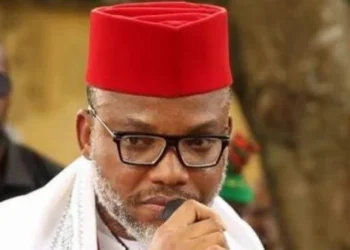
Enugu, Nigeria – The iNews Times | The IPOB leadership crisis has escalated dramatically as the Indigenous People of Biafra (IPOB) https://www.ipob.org released its Code of Conduct, reaffirming that leader Mazi Nnamdi Kanu holds exclusive power to appoint and dissolve the Directorate of State (DOS), the group’s highest administrative body.
In a firm counter-offensive, IPOB dismissed attempts by the dissolved 3rd Administration to suspend Kanu, describing such moves as illegal and unconstitutional. The development underscores deepening divisions within the pro-Biafra movement at a time when its leader remains incarcerated.
In this report, we examine the key developments, reactions from stakeholders, and the broader implications.
Background of the Story
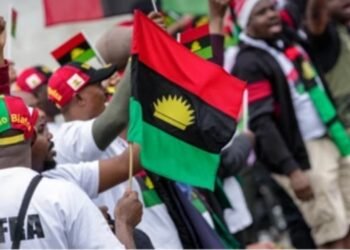
The IPOB leadership crisis stems from long-simmering tensions within the separatist group, which has championed the actualisation of an independent Biafra state in Nigeria’s South-East region. Founded by Nnamdi Kanu, IPOB has grown into one of the most prominent self-determination movements in Nigeria, though it remains proscribed by the federal government as a terrorist organisation.
Kanu, currently serving a life sentence in Sokoto prison following his conviction on terrorism charges, has continued to exert influence over the group’s affairs from detention. The current rift erupted after he dissolved the 3rd Administration of the DOS, headed by Chika Edoziem, and constituted a 4th Administration led by Chris Nwaogu.
Key Developments
Chika Edoziem responded by announcing the suspension of Kanu as leader, arguing that no single individual possessed the authority to dissolve the apex body. IPOB’s spokesman, Emma Powerful, swiftly rejected this action in a strongly worded statement on Saturday.
To settle the controversy, IPOB published extracts from its Code of Conduct, which explicitly vests the power to appoint, suspend, or dismiss principal officers exclusively in Kanu, except where he delegates such authority.
The Code of Conduct further states that once the Supreme Leader exercises this power, affected officers must comply immediately, with no provision for veto, review, or rejection by dismissed officials.
Reactions from Stakeholders
Powerful’s statement left no room for ambiguity. “The IPOB Code of Conduct is the supreme governing instrument of our movement. It is our Constitution,” he declared. “No officer, department, or administration exists above the Code of Conduct.”
The spokesman emphasised that the Directorate of State was created by Kanu as an administrative organ and derives its legitimacy solely from the leader’s authority and the movement’s constitution. He warned that any continued claim to office by members of the dissolved 3rd Administration amounted to acting outside IPOB’s framework and would attract disciplinary sanctions.
Edoziem and his allies have not issued further public responses as of press time, but the swift counter-statement from IPOB’s central leadership appears designed to consolidate support for Kanu’s decisions among the group’s global membership.
Implications
This IPOB leadership crisis carries significant ramifications for the pro-Biafra struggle. Analysts suggest it highlights the challenges of managing a decentralised movement when its charismatic founder and leader remains behind bars. The episode could either strengthen internal discipline or deepen factionalism, potentially weakening IPOB’s cohesion at a critical period in Nigeria’s political landscape.
Economically and socially, continued instability within IPOB may affect agitation strategies in the South-East, where sit-at-home orders and other enforcement mechanisms have previously impacted commerce and daily life. Politically, the crisis tests the resilience of Kanu’s command structure amid ongoing legal battles and federal government pressure.
What Happens Next
The 4th Administration under Chris Nwaogu is reported to be fully operational. IPOB has urged its members worldwide to uphold the supremacy of the Code of Conduct and recognise the dissolution as final and binding.
Observers expect further communications from IPOB leadership to rally supporters, while Edoziem’s faction may explore alternative avenues or seek reconciliation, though the tone of Saturday’s statement suggests little room for compromise.
Conclusion
As the IPOB leadership crisis unfolds, the publication of the Code of Conduct serves as a decisive assertion of constitutional order within the movement. For The iNews Times readers and followers of the Biafra self-determination effort, this moment underscores a fundamental truth: in IPOB’s structure, the authority that creates also possesses the power to reform. How the group navigates this internal test may well shape the future trajectory of the Biafran struggle in Nigeria.