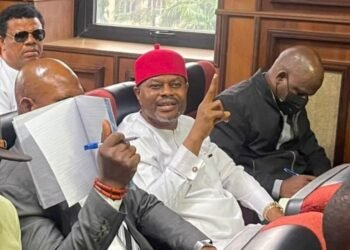
JusticeCrack Abduction Allegation Raises Questions Over Activist’s Arrest.
Social commentator claims DIA operatives disguised as DSS officers, says public pressure prevented his disappearance.
ABUJA, NIGERIA – The iNews Times | JusticeCrack Abduction Allegation claims have triggered renewed controversy after activist and social commentator Justice Chidiebere accused operatives of the Defence Intelligence Agency (DIA) https://defence.gov.ng of abducting him while allegedly posing as officers of the Department of State Services.
The activist, popularly known online as JusticeCrack, made the allegations in a statement shared on X, where he described his detention as inhumane and claimed he was blindfolded, handcuffed, and subjected to harsh treatment for three days before eventually being transferred to DSS custody.
The latest JusticeCrack Abduction Allegation has reignited public debate surrounding the circumstances of his arrest, the role of security agencies, and concerns over enforced disappearances and human rights protections in Nigeria.
In this report, we examine the key developments, reactions from stakeholders, and the broader implications.
Background of the Story
Justice Chidiebere’s ordeal first gained national attention in late April 2026 after family members reported him missing shortly after he dropped his child off at school in Abuja.
The disappearance sparked widespread concern on social media, with activists and Nigerians demanding explanations regarding his whereabouts.
Public outrage intensified before the Nigerian military eventually confirmed on May 2 that the activist was being held in military custody.
Authorities stated at the time that his arrest was connected to viral videos and online posts involving frontline soldiers who complained about inadequate feeding and poor welfare conditions within the military.
According to the military, the content allegedly bordered on subversion and incitement of military personnel.
The matter later moved into the judicial process after the activist was transferred to civil authorities and arraigned before the Federal High Court in Abuja by the DSS on charges linked to cybercrime and conduct likely to breach public peace.
Justice Chidiebere was subsequently granted ₦5 million bail on May 18, 2026, by Justice Joyce Abdulmalik after spending time in DSS custody.
Key Developments
In his latest public statement, the activist insisted that the JusticeCrack Abduction Allegation reflected what truly happened during the operation that led to his detention.
According to him, operatives who initially arrested him identified themselves as DSS officers, but he later discovered they were allegedly linked to the DIA.
“JusticeCrack has never been cracked and will never be cracked. I was abducted by the DIA, who disguised themselves as DSS officers when they came to arrest me,” he wrote.
The activist further claimed that the intervention of Nigerians and sustained public pressure prevented him from disappearing without trace.
“It was only after Nigerians started speaking out and demanding answers that they eventually took me to the DSS. Their intention was to make me disappear, and if Nigerians had not intervened, I might have been gone forever,” he alleged.
Describing conditions during his detention, Chidiebere claimed he was blindfolded and handcuffed continuously for three days.
He also alleged that he was left under intense sunlight during the daytime and confined in an extremely cold room at night.
“After three days of inhumane treatment, it is important for me to state that I was blindfolded and handcuffed throughout those three days. During the day, I was kept under the scorching sun, and at night, I was locked in a freezing cold room,” he stated.
The activist, however, noted that because the matter remains before the court, he could not publicly disclose every detail connected to the case.
Reactions from Stakeholders
The JusticeCrack Abduction Allegation has generated intense reactions from civil society groups, digital rights advocates, and social media users across Nigeria.
Some human rights campaigners called for an independent investigation into the activist’s claims, particularly the allegations involving unlawful detention and mistreatment.
Legal analysts also noted that the case could raise fresh concerns regarding transparency in security operations and the handling of suspects by intelligence agencies.
Supporters of the activist argued that the public outcry surrounding his disappearance may have played a major role in compelling authorities to acknowledge his detention.
Meanwhile, some observers cautioned against drawing final conclusions while the matter remains before the court.
Implications
The JusticeCrack Abduction Allegation carries wider implications for Nigeria’s human rights climate, digital activism, and public trust in security institutions.
Analysts believe the controversy may further intensify scrutiny of how security agencies manage arrests involving critics, activists, and online commentators.
The case also reflects growing tensions between state authorities and digital voices increasingly using social media platforms to challenge public institutions and government narratives.
Observers warn that allegations of enforced disappearances and secret detentions could damage public confidence if not transparently addressed through lawful judicial processes.
What Happens Next
Attention is now expected to shift back to the ongoing court proceedings involving the activist.
Legal teams representing both the prosecution and defence may address the latest allegations as the matter progresses before the Federal High Court in Abuja.
Human rights organisations and civic groups are also likely to sustain calls for accountability and greater transparency regarding the circumstances surrounding the arrest and detention.
Security agencies meanwhile may face mounting pressure to clarify aspects of the operation referenced by the activist.
Conclusion
The growing controversy surrounding the JusticeCrack Abduction Allegation has added a new dimension to an already sensitive case involving national security, cybercrime allegations, and freedom of expression.
As court proceedings continue, the matter is likely to remain a focal point in national conversations surrounding civil liberties, state power, and the treatment of activists within Nigeria’s security and judicial systems.