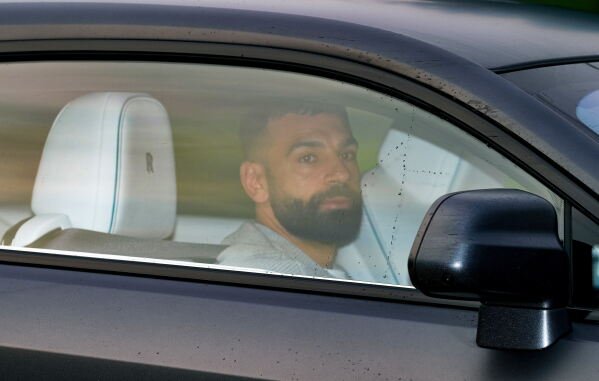
Mohamed Salah handed six-month driving ban after failing to identify Rolls-Royce driver.
Former Liverpool icon convicted in private UK court hearing and fined over unidentified driver in Cheshire speed camera case.
LONDON, UNITED KINGDOM — The iNews Times | Egyptian football star Mohamed Salah has been hit with a six-month Mohamed Salah driving ban after failing to identify the driver of his Rolls-Royce when it was caught speeding in Cheshire earlier this year.
The 34-year-old, now playing for Turkish club Trabzonspor, was convicted at Warrington Combined Court of failing to provide information relating to the identification of the driver. Court documents show the luxury vehicle was recorded travelling at 36mph in a 30mph zone in Wilmslow on 27 March.
In this report, we examine the key developments, reactions from stakeholders, and the broader implications.
Background of the Story
Salah’s legal troubles began just three days after he publicly confirmed he would leave Liverpool https://www.liverpoolfc.com at the end of the 2025/26 season. On 24 March the Premier League club released a statement describing the Egyptian as “one of the greatest players in Liverpool’s history.” Over nine seasons he scored 257 goals in 442 appearances, becoming a global icon and a hero to millions across Africa.
Following the conclusion of that campaign, Salah completed a transfer to Trabzonspor, continuing his career in the Turkish Super Lig. The speeding incident involving his Rolls-Royce occurred while he was still formally a Liverpool player, yet the prosecution and conviction only recently came to light through court records.
Cheshire Constabulary issued a notice of intended prosecution requiring the registered keeper to name the driver. Salah did not respond and entered no plea.
Key Developments
Magistrates dealt with the matter under the Single Justice Procedure, a streamlined process that allows certain low-level cases to be decided in private without a full public hearing. A court spokeswoman confirmed Salah was prosecuted for “failing to give information relating to the identification of the driver of the Rolls-Royce.”
He was subsequently disqualified from driving for six months and ordered to pay £1,044 in total. The Independent and BBC both reported the details after reviewing court documents, confirming that the Egyptian international “failed to inform police who was behind the wheel.”
The conviction stands as a rare public legal setback for a player long regarded as one of the most professional and low-profile superstars in world football.
Reactions from Stakeholders
A Cheshire Constabulary spokesperson said: “Drivers and vehicle keepers have a clear legal duty to respond to notices requiring driver identification. Failure to do so will result in prosecution, regardless of status or profile.”
A football analyst familiar with Salah’s career told The iNews Times: “This is an unexpected stain on an otherwise impeccable off-field record. Fans in Egypt, Nigeria and across the continent will be disappointed, but the bigger question is how it affects his focus at Trabzonspor.”
Representatives for Salah have not issued a public statement.
Implications
The Mohamed Salah driving ban carries both practical and reputational consequences. A six-month disqualification will restrict the player’s ability to drive in the United Kingdom, potentially complicating travel arrangements when he returns for international duty or commercial commitments.
For Nigerian and African supporters who have followed Salah’s journey from the Egyptian Premier League to European stardom, the episode serves as a reminder that even the most celebrated athletes remain subject to the same traffic laws as ordinary citizens. It also raises quiet questions about the management of high-profile players’ off-field affairs at a time when many African stars are expanding their business and media portfolios.
Commercially, the timing is awkward. Salah remains one of the most marketable African athletes. Any prolonged negative coverage risks diluting brand partnerships that rely on an image of discipline and excellence.
What Happens Next
Salah is expected to serve the full six-month ban unless an appeal is lodged and successful. Legal experts note that Single Justice Procedure convictions can be challenged, but success rates are generally low once the court has recorded a conviction.
In Turkey, Trabzonspor will continue to rely on the forward’s goal-scoring form. The club has given no indication that the UK legal matter will affect his playing status. Meanwhile, Egyptian national team coaches will monitor whether the distraction impacts his availability for upcoming fixtures.
Conclusion
The Mohamed Salah driving ban marks an unusual chapter in the career of a player who built his reputation on relentless professionalism and humility. While the offence itself is relatively minor, the failure to engage with the legal process has produced a public conviction and a temporary loss of driving privileges. For fans across Africa who still regard him as a role model, the episode underlines that accountability applies equally on and off the pitch. The iNews Times will continue to follow developments as Salah navigates the consequences of this rare personal setback.