…The development comes amid concerns that petrol prices could rise for the third time within a week.
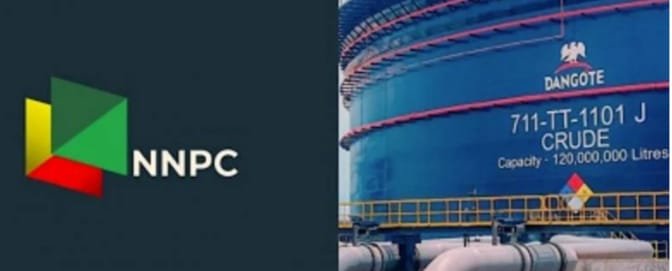
ABUJA, NIGERIA- The iNews Times | petrol supply stability may receive a boost as the Federal Government, through the Nigerian National Petroleum Company Limited, has begun moves to secure crude oil for the Dangote Petroleum Refinery from third-party international traders to sustain domestic refining operations.
However, Petrol prices may not drop immediately despite the move, as Nigerians continue to face rising fuel costs following recent price increases by the $20bn Lekki-based Dangote Petroleum Refinery.
Industry sources disclosed that the refinery recently halted the loading of Premium Motor Spirit (petrol), fuelling speculation about a potential fresh increase in fuel prices. The development comes amid concerns that petrol prices could rise for the third time within a week.
Recent adjustments pushed the refinery’s gantry price from about ₦774 to ₦995 per litre, with pump prices in several states now exceeding ₦1,000 per litre. In some areas, petrol is reportedly selling for around ₦1,200 per litre, intensifying economic pressure on households and businesses.
Market data also shows a significant shift in Nigeria’s crude sourcing pattern. Analytics from Kpler indicate that crude imports from the United States jumped to 41.13 million barrels in 2025, representing a 161 per cent increase from 15.79 million barrels recorded in 2024.
Motorists and industry watchers warn that the rising cost of fuel could further increase transport fares and the prices of goods nationwide. Analysts say the refinery’s temporary suspension of petrol loading highlights the challenges of maintaining steady domestic supply amid global crude market volatility.
One key factor affecting the market is the geopolitical tension in the Middle East, particularly the standoff between Iran and the United States, which has disrupted supply chains and pushed Brent crude prices above $92 per barrel. Tensions around the Strait of Hormuz—a critical global energy shipping route—have also contributed to rising oil prices.
Sources within both NNPC and the Dangote refinery confirmed that the national oil company is leveraging its global crude trading network to source crude from third-party suppliers at competitive international rates.
A senior NNPC official said the company remains committed to supporting local refining as part of efforts to safeguard Nigeria’s energy security and ensure crude supply to the Dangote refinery despite temporary constraints.
Nonetheless, refinery officials cautioned that sourcing crude internationally could keep refined product prices elevated due to the broader impact of global energy market disruptions on crude oil, liquefied natural gas, and other fuels.
The refinery noted that it currently receives about five crude cargoes monthly from NNPC—far below the 13 cargoes required under the naira-for-crude arrangement—forcing it to purchase additional crude at international market rates.
Industry stakeholders say increased crude allocation to local refineries could help moderate petrol prices if the naira-for-crude policy is fully implemented.
Eche Idoko, National Publicity Secretary of the Crude Oil Refinery Owners Association of Nigeria, said the refinery needs about 14 cargoes of crude from the government monthly to meet production demands. According to him, relying heavily on imported crude exposes the refinery to global market costs that are ultimately passed on to consumers.
Idoko also called for the extension of the policy to other domestic refineries to encourage competition and stabilise prices. He added that the refinery’s location within a free trade zone attracts additional costs of about $5 to $7 per barrel, which also affects final pricing.
Energy market analysts also point to limited import licences as another factor influencing market dynamics. Jeremiah Olatide, Chief Executive Officer of Petroleumprice.ng, said nearly 90 per cent of marketers who applied for petrol import permits this year were not granted approval in a bid to encourage local refining, particularly by the Dangote refinery.
Olatide noted that a balanced approach, combining local refining with controlled imports would strengthen Nigeria’s energy security while helping stabilise prices.
Despite the challenges, analysts say the presence of the Dangote refinery has prevented more severe price shocks in the domestic market.
“If the refinery was not operational, petrol prices in Nigeria could easily have climbed to about ₦1,500 per litre,” Olatide said.
Further data from Kpler shows that the refinery increasingly relies on foreign crude supplies. In July 2025, it imported about 590,000 barrels of crude per day, with roughly 60 per cent sourced from US light sweet crude and 40 per cent from Nigerian grades, marking the first time American supply surpassed local crude.
Meanwhile, the Nigerian Upstream Petroleum Regulatory Commission reported that between January and August 2025, domestic refineries received 67.66 million barrels of crude, significantly below the 123.48 million barrels requested.
The Dangote refinery says it continues to absorb part of rising operational costs in a deregulated market to maintain supply stability, warning that selling fuel below cost would threaten its ability to procure crude and sustain production.
Fuel prices currently range between about ₦1,030 and ₦1,100 per litre in major cities, prompting transport operators to increase fares as consumers brace for higher living costs.
Meanwhile, the refinery has expanded its network of petroleum marketers and distribution partners from 13 to over 30 nationwide to sustain product lifting. The list includes NIPCO Plc, MRS Oil Nigeria Plc, TotalEnergies Marketing Nigeria Plc, and Conoil Plc, among others.