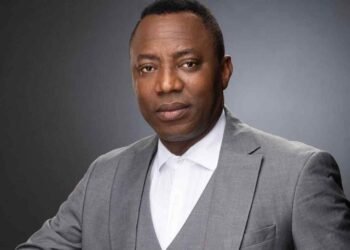
…the charges for which El-Rufai Arraigned by DSS is now the subject of judicial review.
ABUJA, NIGERIA — The iNews Times | Former Kaduna State governor Nasir El-Rufai appeared before a Federal High Court in Abuja on Thursday as El-Rufai Arraigned by DSS became the latest high-profile legal development involving senior political figures and national security institutions.
The Department of State Services (DSS) filed a five-count amended charge against the former governor, accusing him of unlawful interception of communication and related offences connected to the alleged wiretapping of National Security Adviser Nuhu Ribadu’s phone.
At the commencement of proceedings, the prosecution informed the court that the initial three-count charge had been amended to five counts. Justice Joyce Abdulmalik struck out the earlier charge sheet and directed that the amended counts be read.
El-Rufai pleaded not guilty to all five charges.
The case now formally before the court follows comments El-Rufai made in February during an appearance on Prime Time, a political programme aired on Arise Television. During the interview, he claimed that associates had access to a wiretapped conversation involving Ribadu.
“He made the call because we listened to their calls. The government thinks they are the only ones that listen to calls, but we also have our ways,” El-Rufai said during the broadcast.
He further alleged that the NSA’s phone was tapped without a court order and that information from the intercepted communication was relayed to him.
Those remarks form the foundation of the charges for which El-Rufai was Arraigned is now the subject of judicial review.
The Department of State Services, Nigeria’s primary domestic intelligence agency, is responsible for internal security and counterintelligence operations. The office of the National Security Adviser, currently headed by Nuhu Ribadu, plays a central coordinating role in national security policy and intelligence collaboration.
Legal experts note that allegations of unlawful interception of private communications are treated as serious offences under Nigerian law, particularly when they involve senior government officials. Interception of communication without judicial authorisation may constitute a criminal breach depending on the applicable statutory provisions.
With El-Rufai Arraigned by DSS, attention now shifts to whether the prosecution can establish beyond reasonable doubt that unlawful interception occurred and that the former governor bears criminal responsibility.
Analysts say the trial may also test the legal boundaries between political commentary and actionable offences, especially where public statements involve claims of surveillance or counter-surveillance.
The case comes at a politically sensitive time, as national security issues remain central to public discourse. Allegations involving intelligence monitoring, especially at the level of the National Security Adviser, inevitably raise broader questions about oversight, accountability, and due process.
At The iNews Times, our review of past cases involving senior political actors shows that such prosecutions often attract significant public interest while underscoring the importance of procedural fairness and evidentiary scrutiny.
Observers say the development that led to El-Rufai being Arraigned may carry implications beyond the courtroom, potentially shaping political narratives around security agencies and freedom of expression.
During Thursday’s proceedings, the court did not delve into substantive arguments, focusing instead on arraignment formalities and plea entry. The matter was adjourned for further hearing, where evidentiary submissions and legal arguments are expected to begin.
El-Rufai, a former Minister of the Federal Capital Territory and two-term governor of Kaduna State, remains a prominent political figure. His not guilty plea signals that the defence is prepared to contest the allegations vigorously.
For now, the judicial process has only begun. With El-Rufai Arraigned, the case will proceed through the Federal High Court, where prosecutors must substantiate their claims and the defence will have the opportunity to challenge the evidence.
The outcome could set an important precedent regarding allegations of unlawful interception and the legal consequences of public claims involving national security communications.
The iNews Times will continue to follow developments in this case as further proceedings unfold.