…as Elon Musk Slams South Africa Laws circulates globally.
PRETORIA, South Africa — Elon Musk Slams South Africa Laws in a sharply worded criticism that has reignited debate over the country’s employment and transformation policies, particularly the long-standing Black Economic Empowerment (BEE) framework.
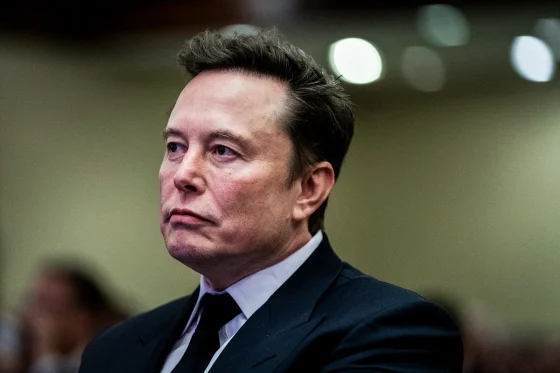
The iNews Times reports that Musk made the controversial remark on Friday via his social media platform, X, alleging that South Africa operates what he described as “extremely racist laws.”
“South Africa has extremely racist laws,” Musk wrote in a brief but pointed post that quickly drew widespread reactions online.
His statement comes amid renewed national debate over Diversity, Equity and Inclusion (DEI) measures and updated employment regulations introduced under the Employment Equity Amendment Act.
Renewed Debate Over Employment Equity
The controversy follows recent regulatory updates that outline workforce representation targets across multiple sectors between 2025 and 2030. The amendments require increased representation of designated groups, including Black people, women, and persons with disabilities.
South African authorities maintain that these measures are necessary to correct structural imbalances created during the apartheid era, when racial discrimination was legally entrenched and economic participation was heavily restricted for the majority population.
President Cyril Ramaphosa has repeatedly defended the framework, reaffirming his administration’s commitment to transformation policies. In recent remarks, he dismissed calls for the scrapping of the Black Economic Empowerment policy, insisting that affirmative action remains critical to addressing historical inequalities.
The debate intensified after Musk’s remarks, placing the spotlight once again on the delicate balance between redress and meritocracy in modern South Africa.
Ramaphosa Stands Firm on BEE Policy
While Elon Musk Slams South Africa Laws continues to trend online, President Ramaphosa has maintained that transformation policies are grounded in constitutional principles aimed at promoting fairness and inclusive growth.
The Black Economic Empowerment (BEE) policy, introduced after the end of apartheid, was designed to expand economic participation among historically disadvantaged South Africans. It influences hiring practices, ownership structures, procurement processes and enterprise development initiatives.
Supporters argue that without such frameworks, economic disparities rooted in decades of exclusion would persist indefinitely.
Critics, however, contend that race-based targets can undermine competitiveness, discourage investment, and create perceptions of reverse discrimination.
Musk’s comments reflect that criticism, though he did not elaborate further on the specific provisions he considers discriminatory.
Mixed Reactions Across Political and Business Circles
The remarks have sparked mixed reactions from political figures, economists, and business leaders.
Some commentators argue that Musk’s characterization oversimplifies a complex policy environment shaped by historical injustice. They maintain that employment equity laws seek to level the playing field rather than marginalize any racial group.
Others, however, support Musk’s position, asserting that race-based workforce quotas may conflict with principles of equal treatment under the law.
As Elon Musk Slams South Africa Laws circulates globally, analysts note that the debate could influence investor sentiment, particularly as South Africa seeks to boost economic growth and attract foreign direct investment.
The country has faced persistent economic challenges, including high unemployment rates, energy supply instability, and sluggish growth in key sectors.
Employment Equity Amendment Act in Focus
The Employment Equity Amendment Act, which underpins the new sectoral targets, empowers authorities to set numerical workforce representation goals for specific industries over a five-year period from 2025 to 2030.
Companies operating within designated sectors are expected to align with these targets or risk potential penalties.
Government officials argue that the updated regulations are not rigid quotas but flexible targets designed to accelerate transformation.
However, critics caution that implementation details will determine whether the policy fosters inclusion or fuels further controversy.
The renewed scrutiny following Musk’s comments has amplified global attention on South Africa’s transformation strategy.
Global Attention and Political Sensitivity
Musk, who was born in Pretoria before relocating to Canada and later the United States, has previously commented on political developments in various countries.
His influence as a high-profile entrepreneur and owner of the social media platform X ensures that his statements resonate widely.
The fact that Elon Musk Slams South Africa Laws at a time of active regulatory enforcement adds further weight to the discussion.
Political analysts suggest that the government is unlikely to retreat from its transformation agenda despite external criticism.
President Ramaphosa has consistently framed BEE and employment equity as foundational pillars of South Africa’s democratic transition.
Broader Implications
The controversy underscores the ongoing tension between economic reform and social justice in post-apartheid South Africa.
Three decades after the end of apartheid, the country continues to grapple with one of the world’s highest inequality rates.
While supporters of DEI measures argue that transformation remains incomplete, critics question whether race-based frameworks are the most effective path toward sustainable economic inclusion.
As the conversation unfolds, the key issue remains whether policy adjustments can balance redress with economic competitiveness.
For now, the debate sparked after Elon Musk Slams South Africa Laws highlights how deeply polarizing transformation policies remain both domestically and internationally.
Whether Musk’s criticism prompts policy review or merely intensifies public discourse remains to be seen.
But one thing is clear: South Africa’s employment equity framework is once again under global scrutiny.