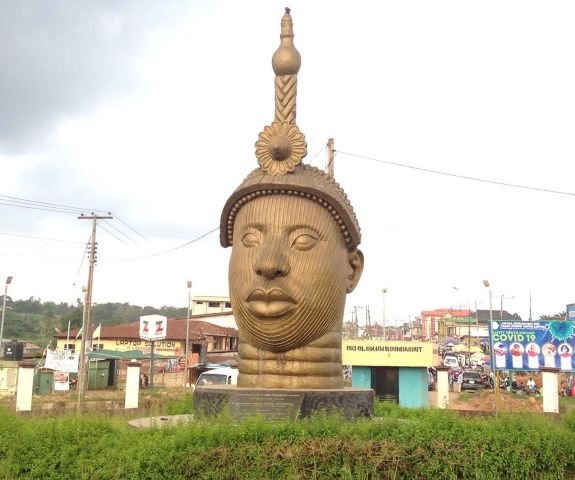
…the Yoruba Origin Debate has grown more layered in recent decades.
ILE-IFE, NIGERIA — The iNews Times reports that the Yoruba Origin Debate has once again taken centre stage in academic and cultural circles, as historians, traditional custodians and researchers revisit long-standing narratives surrounding the ancestry of one of Africa’s most influential ethnic groups.
For centuries, a dominant tradition has upheld Ile-Ife as the cradle of Yoruba civilisation and, in some accounts, the symbolic birthplace of humanity itself. According to classical Yoruba cosmology, the Supreme Being commissioned divine figures to create the earth when it was covered entirely by water. While Obatala was initially entrusted with the sacred task but failed after becoming intoxicated, Oduduwa is believed to have completed the mission by descending from the heavens to form land, humans and other living creatures.
This creation account places Ile-Ife at the spiritual epicentre of Yoruba identity. Within this framework, Oduduwa is widely regarded not only as a divine agent of creation but also as the progenitor of Yoruba kings and the founder of early political authority across the region. Many Yoruba monarchies trace their lineage directly to Oduduwa, reinforcing Ile-Ife’s enduring status as the ancestral source of legitimacy and kingship.
Yet, the Yoruba Origin Debate has grown more layered in recent decades, as alternative historical interpretations challenge or complicate this long-held belief. A competing tradition suggests that the Yoruba people or at least their ancestral figure Oduduwa may have originated outside present-day Nigeria.
According to the migration theory, Oduduwa was a prince and son of Lamurudu, described in some oral traditions as a ruler in Mecca. The account maintains that he was exiled after rejecting prevailing religious norms and embracing idol worship. Following his exile, he is said to have journeyed southward with followers before eventually settling in Ile-Ife, where he established political authority.
Although controversial, the migration narrative has persisted in historical writings and oral traditions for generations. Scholars describe the coexistence of these accounts as a “divergence of traditions,” reflecting the complexity of reconstructing precolonial African history where oral sources, mythological symbolism and archaeological evidence intersect.
Beyond the mythological and migratory accounts, some historians argue that the Yoruba people may have developed indigenously within West Africa. This perspective proposes that early Yoruba settlements possibly emerged near the Niger-Benue confluence before consolidating around Ile-Ife as a political and spiritual centre. Proponents of this theory emphasise linguistic patterns, archaeological discoveries and cultural continuities as evidence of long-term regional development rather than a single migration event.
The Yoruba Origin Debate is not confined to academic discourse alone. Analysts note that questions of origin are deeply intertwined with issues of cultural identity, legitimacy and traditional authority. In Yoruba society, ancestry and historical claims often influence royal hierarchies, territorial rights and inter-kingdom relations.
For centuries, Ile-Ife has held symbolic supremacy as the ancestral home of all Yoruba kingdoms. This status has sometimes generated rivalry among monarchs and communities, particularly when disputes arise over seniority or political influence. The assertion of descent from Oduduwa remains a powerful claim that shapes perceptions of authority and continuity.
Historical tensions have also reflected these identity dynamics. The long-running Ife-Modakeke crisis, for instance, was partly rooted in disagreements over indigeneity and settlement rights. Although the conflict had multiple dimensions, scholars argue that underlying narratives about who arrived first and who possesses ancestral ownership of land contributed significantly to the dispute. The Yoruba Origin Debate, therefore, demonstrates how historical narratives can shape real-world social and political realities.
Contemporary researchers caution against viewing any single account as definitive. Instead, they suggest that the Yoruba past may be best understood as a tapestry woven from myth, migration, adaptation and local evolution. Mythological narratives often carry symbolic truths about identity and cosmology, even when they are not strictly historical in the modern academic sense.
What remains largely undisputed, however, is the central role of Ile-Ife in Yoruba consciousness. The city continues to serve as a unifying emblem of heritage, spirituality and kingship. Festivals, coronation rites and traditional ceremonies frequently reference its foundational importance, reinforcing its enduring influence regardless of which origin theory one adopts.
In recent years, renewed scholarly interest, aided by advances in archaeology and historiography, has encouraged more nuanced conversations about the Yoruba past. Rather than diminishing cultural pride, many experts argue that critical reassessment enriches collective understanding and strengthens identity through deeper knowledge.
As discussions surrounding the Yoruba Origin Debate resurface in universities, cultural institutions and public forums, the conversation reflects more than a quest for historical clarity. It underscores the power of narrative in shaping how a people understand themselves, define legitimacy and preserve heritage across generations.
The iNews Times observes that the enduring fascination with Yoruba origins speaks to the resilience of a civilisation whose influence spans politics, religion, art and global diaspora communities. Whether rooted solely in Ile-Ife’s sacred soil, shaped by migratory currents, or formed through indigenous evolution within West Africa, the Yoruba story remains one of complexity, continuity and profound cultural depth.
In the end, the Yoruba Origin Debate is less about choosing one narrative over another and more about recognising the richness of a history that continues to inspire reflection, scholarship and identity formation in modern Nigeria and beyond.