…the US Embassy Closure was linked to Nigeria’s electoral cycle.
ABUJA, NIGERIA — The iNews Times reports that the US Embassy Closure in Nigeria has sparked nationwide discussion, with Senate President Godswill Akpabio attributing the development to global security concerns rather than domestic political tensions.
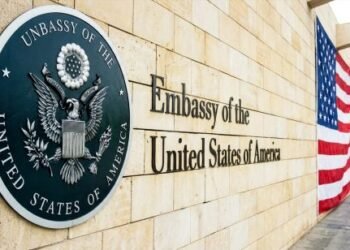
The clarification comes after the United States Department of State authorised the departure of non-emergency government personnel and their families from its embassy in Abuja on April 8, 2026. The directive, which took immediate effect, followed what American authorities described as a worsening security environment across Nigeria.
In an updated travel advisory, the U.S. government warned its citizens to reconsider travel to Nigeria, citing rising concerns over crime, terrorism, kidnapping, civil unrest and inconsistent healthcare services. The announcement quickly triggered widespread speculation, particularly as political activities intensify ahead of future elections.
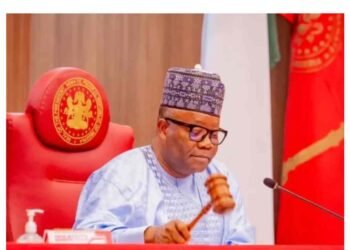
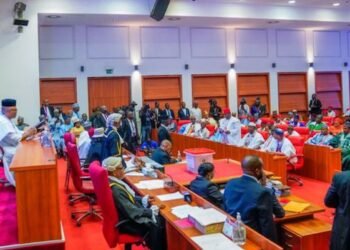
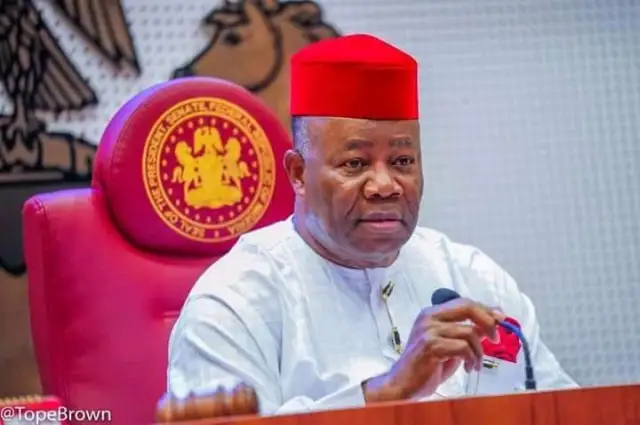
Addressing the issue during the commissioning of the new National Assembly Service Commission (NRS) headquarters in Abuja, Senate President Akpabio dismissed claims that the US Embassy Closure was linked to Nigeria’s electoral cycle. According to him, such assumptions were misplaced and failed to consider broader global security dynamics.
“Some people say that even now, some embassies are closing down. Not many embassies are actually closing; many of the embassies are afraid of repercussions from their foes,” he said.
Akpabio explained that countries like the United States often take precautionary steps across multiple regions when facing heightened tensions with adversarial nations. He suggested that recent global developments may have influenced Washington’s security posture toward its diplomatic missions worldwide.
“For instance, I can say that America is a bit worried about a bomb blast from Iran, and so across the world they have to reduce their staff in case Iran decides to attack their embassies,” Akpabio stated.
His remarks sought to frame the US Embassy Closure within a broader international security context, distancing Nigeria from suggestions that the decision reflected deteriorating domestic political stability.
The Senate President cautioned Nigerians against interpreting the move through a narrow political lens, particularly in relation to upcoming elections. He stressed that elections are routine democratic processes and should not be seen as triggers for foreign diplomatic withdrawals.
“But people are thinking, oh, Nigerian embassies are closing because election is coming. It’s not because election is coming. Election will come and go, and God will protect you,” he added.
The US Embassy Closure has nonetheless intensified conversations about Nigeria’s overall security landscape. While American authorities cited security concerns in their advisory, they did not specify any imminent threat targeting diplomatic facilities in Abuja. Instead, the advisory referenced general security risks, including terrorism and kidnapping, which have remained persistent challenges in parts of the country.
Security analysts note that embassies routinely review and adjust staffing levels based on threat assessments, global intelligence reports and geopolitical tensions. Temporary staff reductions do not necessarily signify diplomatic breakdowns or complete shutdowns of operations. In many cases, essential services continue even when non-emergency personnel are evacuated.
Diplomatic observers also point out that precautionary withdrawals have become more common in recent years as geopolitical rivalries intensify worldwide. The United States, in particular, has periodically adjusted embassy staffing levels in various regions in response to perceived threats.
Akpabio’s intervention appears aimed at calming public anxiety and reinforcing confidence in Nigeria’s stability. By attributing the US Embassy Closure to global security fears rather than domestic electoral tensions, he sought to reassure citizens and international partners that Nigeria remains committed to democratic continuity and public safety.
The iNews Times understands that while the travel advisory has drawn attention, Nigerian authorities have not announced any reciprocal diplomatic action. Government officials continue to emphasise collaboration with international partners to address security challenges and strengthen intelligence-sharing mechanisms.
Political analysts argue that public perception often amplifies diplomatic developments, especially in election seasons. In such periods, even routine security adjustments can be interpreted through partisan lenses. However, officials insist that Nigeria’s democratic institutions remain functional and resilient.
As discussions surrounding the US Embassy Closure continue, the broader issue remains the interplay between global geopolitics and local realities. International tensions can have ripple effects far beyond their immediate theatres, influencing diplomatic decisions in countries not directly involved in conflicts.
For now, Senate President Akpabio maintains that Nigerians should not conflate precautionary diplomatic measures with internal political instability. His message underscores a call for calm, urging citizens to separate global security calculations from Nigeria’s domestic democratic processes.
The iNews Times will continue to monitor developments surrounding the US Embassy Closure and provide verified updates as diplomatic and security assessments evolve.