Tinubu pictures on First Niger Bridge draw sharp rebuke as ADC chieftain brands Umahi directive sycophancy taken too far.
Anambra opposition figure questions use of public funds for political imagery amid ongoing bridge rehabilitation and 2027 election calculations.
AWKA, NIGERIA — The iNews Times | A leading chieftain of the African Democratic Congress https://adc.org.ng in Anambra State has strongly condemned the directive by the Minister of Works, Dave Umahi, for Tinubu pictures on First Niger Bridge to be displayed once rehabilitation works are completed, describing the order as sycophancy taken too far.
Ndubuisi Nwobu, an ADC leader and the party’s deputy governorship candidate in the 2025 Anambra election, argued that the funds used for the repairs belong to the Nigerian people and not to President Bola Tinubu personally. He insisted that decorating a vital public asset with the President’s images would confer no political advantage on the ruling All Progressives Congress.
In this report, we examine the key developments, reactions from stakeholders, and the broader implications.
Background of the Story
The First Niger Bridge, a critical 1.4-kilometre link connecting Onitsha in Anambra State with Asaba in Delta State, was shut to traffic on 7 September 2026 after vandals removed essential structural components, including bolts, nuts and sections of the expansion joints. The Federal Government initially targeted a 21 September reopening. Persistent rainfall delayed completion, pushing the expected return of motorists into the following week.
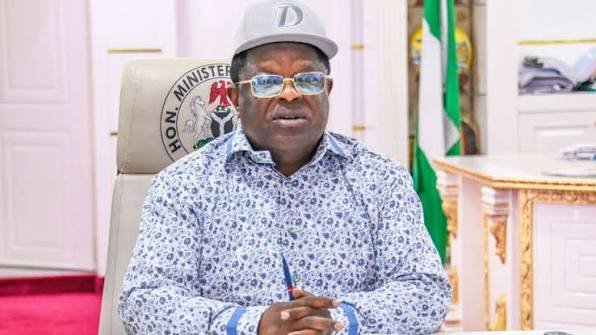
Minister Umahi inspected the ongoing works at the Onitsha end on Wednesday. He ordered the immediate removal of all illegal advertisements on the structure and directed that future commercial placements must receive formal approval from the Federal Ministry of Works. In the interim, he instructed the Senior Special Assistants to the President from the South-East and South-South to “fertilise,” beautify and colour the bridge with Tinubu’s pictures as a mark of appreciation for the President’s “quick intervention and the quality of work.”
Umahi also mandated additional solar lighting, completion of CCTV installations with linkage to the Second Niger Bridge, and a technical evaluation of the structure both above and below water level. During the same visit he urged Ndigbo not to “throw away” their votes in the 2027 presidential election, arguing that the Tinubu administration has delivered projects to the region despite limited support in the previous poll.
Key Developments
Umahi’s directive on Tinubu pictures on First Niger Bridge has rapidly become a flashpoint. The minister framed the display as earned recognition rather than political advertising. Opposition voices, however, view it as an inappropriate personalisation of public infrastructure funded from the national treasury.
Nwobu’s statement on Thursday crystallised the criticism. He maintained that the rehabilitation was carried out with money belonging to the entire citizenry and that no individual office-holder should be celebrated as though the expenditure were personal largesse.
Similar sentiments have emerged from other opposition figures in Anambra, including the state chairman of the Nigeria Democratic Congress, who characterised the move as sycophantic and an attempt at “vain glory.”
Reactions from Stakeholders
Nwobu was categorical. “The Minister of Works’ directive for the First Niger Bridge to be decorated with President Tinubu’s photographs is sycophancy taken too far,” he said. “The money used in the maintenance of the bridge is not Tinubu’s personal money. The money belongs to the entire citizens of this country. And what the government has done is that it used money from the commonwealth to repair the bridge.”
He added that the country is in an election season but that “decorating the Niger Bridge with Tinubu’s picture can never give them any political advantage. On election day, the people will vote for whosoever they want.”
The Anambra State Government and elements within the ruling All Progressives Grand Alliance have also expressed reservations, arguing that priorities should focus on functional infrastructure rather than political imagery. The iNews Times understands that these internal disagreements have placed the state administration at variance with federal political messaging on the project.
Implications
The controversy over Tinubu pictures on First Niger Bridge underscores deeper tensions around the politicisation of public works in the approach to the 2027 general elections. The bridge is not merely a transport artery; it is a high-visibility symbol of federal presence in the South-East and South-South. Using it as a canvas for presidential imagery risks reinforcing perceptions that infrastructure delivery is being leveraged for electoral advantage rather than treated as a routine governmental responsibility.
For the ruling party, the gesture may be intended to claim credit and mobilise goodwill in a region where support has historically been uneven. For the opposition, it supplies ready evidence of what they term excessive sycophancy and a failure to distinguish between state resources and personal political capital. The episode also raises practical questions about the governance of public assets: who controls advertising space on federal bridges, and under what conditions political messaging may occupy that space.
What Happens Next
The First Niger Bridge is expected to reopen to traffic next week once final structural checks are completed and safety is certified. Whether the directive on Tinubu pictures will be fully implemented remains to be seen, particularly in light of pushback from the Anambra Government and opposition parties. The Ministry of Works has not yet issued a detailed response to the criticisms. Political actors across the spectrum will watch closely for any further federal messaging on the project as the 2027 campaign season intensifies.
Conclusion
The dispute over Tinubu pictures on First Niger Bridge is larger than a single ministerial instruction. It crystallises enduring arguments about accountability, the proper use of public funds, and the boundary between legitimate recognition of executive action and political overreach. As the rehabilitated bridge prepares to resume service, the conversation it has provoked will continue to test how Nigerians evaluate infrastructure delivery in an election year. The iNews Times will continue to track developments on this and related national infrastructure projects.