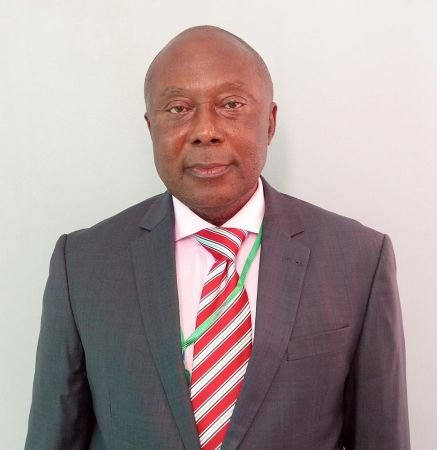
…he briefly served as Acting Accountant-General of the Federation, was removed from office following allegations of corruption.
Abuja, Nigeria — The iNews Times | Ex-Accountant-General fraud case has ended in a major conviction as the Federal High Court in Abuja sentenced former Acting Accountant-General of the Federation, Chukwunyere Anamekwe Nwabuoku, to 72 years imprisonment over his involvement in an N868.46 million fraud.
The judgment marks a significant moment in Nigeria’s ongoing anti-corruption drive, following his prosecution by the Economic and Financial Crimes Commission (EFCC) on multiple counts bordering on money laundering and alleged diversion of public funds.
According to the EFCC, the case involved the concealment, transfer, and laundering of over N868 million through a series of complex financial transactions allegedly designed to obscure the source and ownership of the funds.
In a statement posted on its official X handle on Monday, the anti-graft agency described the ruling as a strong reaffirmation of its commitment to accountability in public service and the fight against financial crimes.
“The former Acting Accountant-General of the Federation, Chukwunyere Anamekwe Nwabuoku, who was prosecuted by the EFCC at the Federal High Court, Abuja, for money laundering involving N868.46 million has been convicted and sentenced to jail for 72 years,” the commission stated.
The court arrived at the decision after reviewing extensive evidence presented by the prosecution, which detailed how the funds were allegedly moved through multiple accounts and layered transactions in an attempt to conceal their origin.
Judicial proceedings revealed that the prosecution relied on documentary evidence, financial records, and witness testimonies linking the defendant to the movement of suspicious funds tied to public resources.
The Ex-Accountant-General fraud case resulted in a cumulative 72-year sentence, reflecting penalties assigned to each count on which the defendant was found guilty.
Although the total sentence appears lengthy, legal experts note that such terms are often subject to interpretation under sentencing practices, including whether they run concurrently or consecutively during enforcement.
Nwabuoku, who briefly served as Acting Accountant-General of the Federation, was removed from office following allegations of corruption that later formed the basis of the EFCC investigation and prosecution.
His tenure at the nation’s treasury management office was short-lived but highly controversial, as concerns were raised over financial governance and internal controls during his time in office.
The EFCC has consistently maintained that the conviction represents a milestone in efforts to ensure that public officials are held accountable for the management of government funds.
The commission also emphasized that the outcome reinforces its mandate to pursue financial crimes irrespective of the rank or position of those involved, stating that public office holders must be held to strict standards of accountability.
Legal observers have described the ruling as one of the most significant corruption-related convictions in recent years, particularly given the seniority of the office previously held by the defendant.
They argue that the judgment could serve as a deterrent to other public officials involved in financial mismanagement or abuse of office.
However, analysts also note that the final enforcement of the sentence may still be influenced by possible appeals or further judicial review, which is common in high-profile corruption cases.
Within anti-corruption circles, the verdict is being seen as a reinforcement of judicial willingness to impose severe penalties in cases involving large-scale financial crimes against the state.
The EFCC has reiterated its commitment to sustaining investigations and prosecutions targeting public-sector corruption, stressing that no individual is above the law.
As the Ex-Accountant-General fraud case continues to attract national attention, it is expected to remain a reference point in discussions around governance, accountability, and financial discipline in Nigeria’s public sector.