…those fueling the Nnewi political crisis represent less than one percent of the population.
AWKA, Nigeria — The iNews Times | The escalating Nnewi political crisis took a decisive turn on Sunday as more than 250 influential stakeholders gathered in the industrial town to deliberate on what they described as urgent steps to restore political order, stability and respect for long-standing zoning principles.
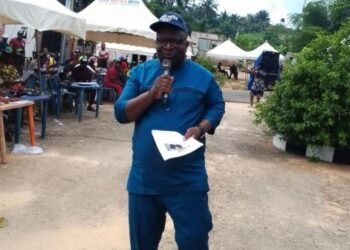
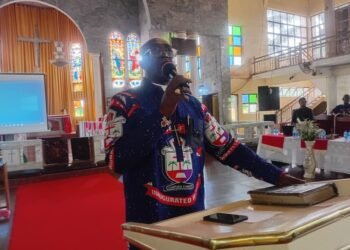
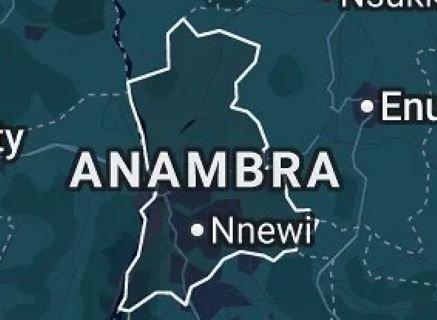
The high-level meeting, held at the residence of Chief Gabriel Chukwuma, President of the Gabros Group, at Uru, Umudim-Nnewi in Nnewi North Local Government Area of Anambra State, brought together respected leaders drawn from the four quarters of Nnewi. The stakeholders, described by insiders as formidable voices in the town’s political and economic structure, met behind closed doors to chart what they termed a “clear way forward” for the industrial hub.
Investigations by The iNews Times revealed that the emergency convergence was triggered by dissatisfaction over the conduct of the All Progressives Grand Alliance primary election for the Mayor of Nnewi North Council. Several participants reportedly expressed concern over what they described as irregularities in the process, alleging that the established rotational understanding within the community was not respected.
Under Nnewi’s long-observed rotational arrangement, the Nnewichi axis was expected to produce the next Mayor of Nnewi North. However, the party primary returned Eche Anazodo from Umudim-Nnewi, a development that has since fueled the Nnewi political crisis and heightened debate across the industrial town.
Sources at the meeting claimed that certain influential individuals allegedly leveraged close ties with Anambra State Governor, Professor Charles Soludo, to alter what many believed was a near-consensus zoning outcome. Though no official statement has been issued by the state government on the allegations, the perception of interference has intensified local political tension.
Throughout the deliberations, speakers reportedly commended Chief Gabriel Chukwuma for convening what many described as a courageous and necessary intervention. They emphasized that the meeting was not designed to inflame tensions but to safeguard the political stability that has historically distinguished Nnewi as one of Nigeria’s foremost industrial centers.
The Nnewi political crisis also took a traditional dimension, as several stakeholders expressed dissatisfaction over the treatment of the town’s paramount ruler, His Royal Highness Igwe Kenneth Onyeneke Orizu III. Participants recalled that the respected monarch had earlier written to Governor Soludo regarding adherence to the zoning principle in the town. Many speakers at the gathering reportedly condemned what they described as the dismissive handling of the monarch’s concerns.
Observers note that Nnewi’s zoning arrangement has for years served as a stabilizing mechanism in the community’s politics. The rotational structure is widely credited with ensuring fairness, balance and inclusiveness among the town’s quarters, thereby preventing the type of political fragmentation that has destabilized other communities.
Participants at the meeting maintained that those allegedly fueling the Nnewi political crisis represent less than one percent of the population and should not be allowed to undermine the collective will of the broader community. Several speakers described the current tension as avoidable, insisting that adherence to established agreements would have prevented the dispute.
In his remarks while presenting what was described as the general consensus of the assembly, Chief Chukwuma stated that the objective of the gathering was not to trade accusations but to seek lasting solutions. He stressed that Nnewi must not allow political disagreements to erode its long-standing reputation for unity, enterprise and peace.
According to him, the movement emerging from the stakeholders’ meeting is not targeted at any individual but at correcting perceived irregularities. He emphasized that the goal is to restore Nnewi to what he called its rightful path of structured progress and political order.
Nnewi, often referred to as the “Japan of Africa” due to its concentration of indigenous manufacturing and automotive industries, occupies a strategic position in Anambra State’s economic landscape. Political stability in the town is therefore considered critical not only for local governance but also for investor confidence and sustained economic activity.
Political analysts observing the Nnewi political crisis argue that how the matter is resolved may significantly shape grassroots politics ahead of future local government and state-level contests. They note that internal disputes within dominant political structures often have ripple effects beyond municipal boundaries.
As of press time, the leadership of the All Progressives Grand Alliance in Anambra State had not released an official reaction to the concerns raised by the stakeholders. Likewise, there has been no formal response from the state government regarding the zoning controversy.
The iNews Times gathered that follow-up consultations may continue in the coming days as community leaders seek broader consensus and possible reconciliation mechanisms. For many residents, the hope is that dialogue and institutional respect will prevail over factional disagreements.
The unfolding Nnewi political crisis underscores the delicate balance between party politics, traditional authority and community agreements in Nigeria’s evolving democratic landscape. Stakeholders insist that preserving the zoning framework is essential to maintaining trust and preventing deeper divisions.
The iNews Times will continue to monitor developments surrounding the Nnewi political crisis and provide timely updates as the situation evolves.