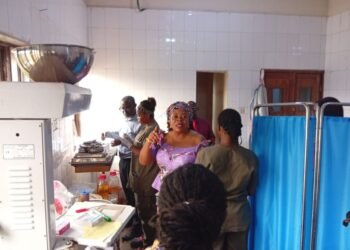
World Blood Donor Day: Anambra First Lady Highlights Importance of Voluntary Blood Donation.
Dr Nonye Soludo says one donation can save multiple lives as she celebrates voluntary donors across the state.
Awka, Nigeria – The iNews Times | World Blood Donor Day took centre stage in Anambra on Sunday as the wife of the state governor, Dr Nonye Soludo, called on eligible residents to make regular blood donation a habit, describing it as one of the most powerful acts of compassion and humanity.
In her message marking the global health observance, Dr Soludo stressed that blood donation remains a critical pillar in saving lives, especially for accident victims, mothers during childbirth, and patients battling life-threatening medical conditions. Her call comes at a time health experts continue to warn about shortages in blood banks across Nigeria.
In this report, we examine the key developments, reactions from stakeholders, and the broader implications.
Background of the Story
Observed annually on June 14, World Blood Donor Day is dedicated to raising awareness about the importance of safe blood and honouring voluntary donors whose contributions save millions of lives globally.
The day also serves as a reminder of the urgent need for regular blood donations to maintain adequate supplies in hospitals and health facilities.
In Nigeria, healthcare professionals have repeatedly highlighted the challenge of insufficient blood reserves, often worsened by low voluntary participation and dependence on emergency donations.
This reality has made campaigns around World Blood Donor Day increasingly significant, particularly in states like Anambra where maternal healthcare and accident response remain key public health priorities.
Key Developments
Speaking in her goodwill message, Nonye Soludo described voluntary blood donors as heroes whose generosity continues to impact countless families and communities.
She noted that every unit of blood donated carries hope for patients facing emergencies and serious illnesses.
According to her, blood donation is not only an act of kindness but also a civic responsibility that strengthens the healthcare system.
“As we mark World Blood Donor Day, we celebrate selfless individuals who give a part of themselves to save the lives of others,” she said.
She emphasised that the availability of safe and sufficient blood depends largely on healthy individuals who are willing to donate consistently.
Dr Soludo added that a single blood donation can save multiple lives, describing it as one of the greatest gifts a person can offer.
Reactions from Stakeholders
Healthcare workers in Anambra welcomed the First Lady’s message, describing it as timely and necessary.
Medical experts say public awareness remains one of the strongest tools in improving blood donation culture across the country.
A senior medical practitioner at a public hospital in Awka told The iNews Times that campaigns around World Blood Donor Day often help bridge knowledge gaps and encourage first-time donors.
Community health advocates also commended the push, noting that myths and fears around blood donation still discourage many Nigerians from participating.
For them, endorsements from influential figures such as the First Lady could inspire wider public acceptance.
Implications
The significance of World Blood Donor Day extends beyond symbolic celebration. It highlights the urgent need for sustainable blood donation systems capable of supporting emergency care.
In a country where maternal mortality, road accidents and medical emergencies remain pressing concerns, blood availability can often determine survival.
Experts say increasing voluntary donations could reduce the burden on families who are often forced to source blood under critical conditions.
At The iNews Times, health analysts note that building a strong donation culture will require continuous education, trust-building and improved blood management systems.
What Happens Next
Health authorities and advocacy groups are expected to sustain awareness campaigns beyond World Blood Donor Day to encourage regular donor participation.
In Anambra, the renewed push by Dr Soludo may also strengthen community-based health initiatives focused on blood donation drives.
Hospitals and blood banks are likely to intensify outreach programmes aimed at recruiting more voluntary donors.
The long-term goal remains building a stable and safe blood supply system capable of meeting rising healthcare demands.
Conclusion
As the world marks World Blood Donor Day, the message from Anambra’s First Lady is clear: blood donation saves lives and should become a shared social responsibility.
Her call serves as both a tribute to existing donors and a challenge to more Nigerians to step forward.
In a healthcare system where every drop counts, the culture of giving blood may prove to be one of the strongest acts of humanity.