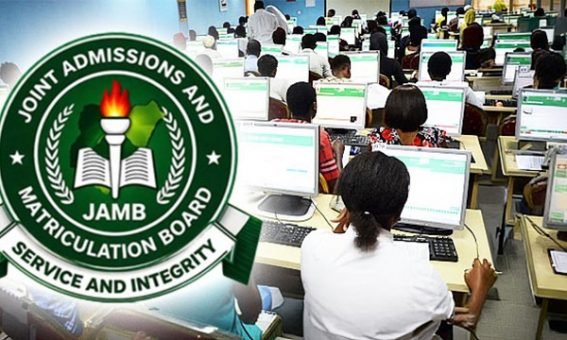
…says there’s need to scrap UTME and reform Nigeria’s higher education entry system.
PORT HARCOURT, NIGERIA — The iNews Times reports that calls to scrap UTME have gained renewed momentum after the Founder and General Overseer of Omega Power Ministries (OPM), Apostle Chibuzor Gift Chinyere, urged the Federal Government to abolish the Unified Tertiary Matriculation Examination organised by Joint Admissions and Matriculation Board (JAMB).
Speaking during a sermon at the church’s international headquarters in Port Harcourt, Rivers State, Apostle Chinyere described the current university admission structure as burdensome, outdated, and unnecessarily stressful for Nigerian students.
The cleric argued that the multiple screening layers involved in securing tertiary admission justify the need to scrap UTME and reform Nigeria’s higher education entry system.
Explaining his position, Apostle Chinyere listed the stages prospective students must pass through before gaining admission into Nigerian universities.
“In Nigeria, you will write WAEC; after WAEC, you will write JAMB; after JAMB, you will write post-UTME; then you wait for the school cut-off mark and departmental cut-off mark. If you don’t meet it, you wait another year, register for JAMB again, and start afresh. It is very frustrating,” he said.
According to him, the existence of WAEC, UTME, and post-UTME screening exercises creates duplication rather than efficiency.
He insisted that the call to scrap UTME stems from the reality that tertiary institutions still conduct separate examinations and screening processes even after candidates pass JAMB.
“JAMB has lost its relevance because universities still organise their own entrance examinations after UTME,” he added.
Education analysts have long debated whether the UTME still serves its original coordination purpose or whether universities should be granted full autonomy to conduct admissions independently.
Beyond structural concerns, the OPM founder criticised the early examination schedule, particularly the 6:30 a.m. sittings.
He questioned the rationale behind such timing, noting that candidates often travel long distances to sit for the examination.
“Sometimes I wonder why JAMB fixes exams for 6:30 a.m. Do you know that for all my adopted children under OPM scholarships going for JAMB, I have to give them extra money to pay for hotels?” he queried.
Apostle Chinyere explained that many candidates are compelled to lodge near their examination centres overnight to avoid missing early sessions. This arrangement, he argued, increases financial pressure on families and sponsors.
“They cannot travel safely that early, so they have to stay overnight in hotels close to their centres. This creates additional financial pressure,” he said.
The demand to scrap UTME, he maintained, is partly driven by these logistical and security concerns affecting thousands of Nigerian families annually.
The cleric also criticised the practice of posting candidates to centres far from their residences.
“JAMB is always posting them to centres very far away from where they live. What should have been done is to post them to centres close to their homes,” he stated.
In Nigeria’s current security climate, long-distance travel for examinations has raised concerns among parents and guardians.
Referencing reports circulating on social media about the alleged abduction of UTME candidates in Benue State, Apostle Chinyere described the development as “very unfortunate,” adding that reforms are urgently needed to protect students.
While security agencies have not issued comprehensive confirmation of the reported incident, the concerns have intensified calls from various stakeholders to review the admission process.
Drawing comparisons with admission systems abroad, Apostle Chinyere argued that many countries operate more flexible and decentralised admission processes.
“If you want to get admission into universities outside Nigeria, you don’t need JAMB. You apply to the university, they send you an unconditional letter of offer, and when fees are paid, a conditional offer follows after verification of results. They won’t ask you to write JAMB,” he explained.
In countries such as the United Kingdom, Canada, and the United States, admissions are often based on secondary school results, standardised tests conducted by independent bodies, recommendation letters, and direct university evaluations.
Supporters of maintaining UTME argue that JAMB provides a centralised, standardised system that prevents admission irregularities. However, critics believe decentralisation could reduce bottlenecks and repeated examination cycles.
The debate over whether to scrap UTME therefore reflects broader questions about educational reform, accessibility, and institutional autonomy.
Apostle Chinyere warned that repeated admission setbacks may discourage prospective students, potentially increasing the number of out-of-school youths.
He noted that some candidates sit for UTME multiple times without securing admission, leading to frustration and financial strain.
The cleric emphasised that for over 15 years, OPM has sponsored underprivileged Nigerians on scholarships both locally and internationally. Based on this experience, he said reforms must prioritise inclusivity and reduce barriers to tertiary education.
“Education should not become a yearly cycle of disappointment,” he implied, urging policymakers to consider structural adjustments.
The call to scrap UTME comes amid ongoing national conversations about education funding, university autonomy, and curriculum reform.
JAMB was established to coordinate admissions into tertiary institutions across Nigeria, aiming to streamline the process and reduce duplication. Over the years, however, universities introduced post-UTME screenings, creating a layered system.
Stakeholders remain divided; some believe abolishing UTME could create admission chaos. Others argue reforming or restructuring it could improve efficiency. A growing number advocate decentralising admissions entirely.
As the debate unfolds, the Federal Government has yet to respond officially to Apostle Chinyere’s remarks.
The renewed demand to scrap UTME underscores growing frustration among sections of the public regarding Nigeria’s tertiary admission process.
Whether policymakers will consider reforming or abolishing the examination system remains to be seen. What is clear, however, is that the conversation around access to higher education is intensifying.
The iNews Times will continue to monitor reactions from education authorities, policymakers, and stakeholders nationwide as this critical national debate evolves.