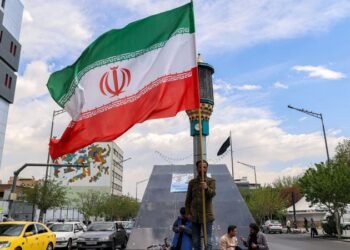
…Tehran reacted angrily, with state-affiliated outlets reporting that Iranian forces deployed drones toward US naval ships.
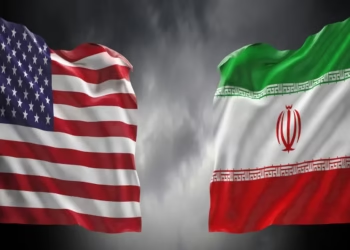
TEHRAN, IRAN — The iNews Times reports that the next round of Iran-US talks has been thrown into uncertainty after Tehran announced it has no plans to attend the scheduled negotiations in Pakistan, citing escalating tensions over a United States naval blockade and renewed military confrontations in the Gulf.
Iranian state media on Sunday quoted official sources as saying “there are currently no plans to participate in the next round of Iran-US talks,” despite moves by Donald Trump to dispatch American negotiators to Islamabad.
The decision marks a significant setback for diplomatic efforts aimed at preserving a fragile ceasefire between Iran, the United States, and Israel, which is set to expire within days.
At the center of the worsening crisis in Iran-US talks is Washington’s ongoing naval blockade of Iranian ports, a move designed to curtail Tehran’s oil exports and restrict its economic lifelines.
Tensions sharply escalated after a US destroyer intercepted and seized an Iranian-flagged cargo vessel, identified by Trump as the “Touska,” which allegedly attempted to breach the blockade.
“A massive ship tried to get past our Naval Blockade, and it did not go well for them,” Trump stated, adding that a US destroyer forced the vessel to stop “by blowing a hole in the engine room.” He further disclosed that US Marines had taken custody of the ship.
According to Trump, the vessel was under US Treasury sanctions due to what he described as a “prior history of illegal activity.”
Tehran reacted angrily, with state-affiliated outlets reporting that Iranian forces deployed drones toward US naval ships following the seizure. The Iranian Student News Agency (ISNA) quoted a military spokesperson as warning that Iran’s armed forces would soon retaliate against what was described as “armed piracy.”
The incident has dramatically worsened the atmosphere surrounding the Iran-US talks, with Iranian outlets Fars and Tasnim warning that “the overall atmosphere cannot be assessed as very positive.”
The strategic Strait of Hormuz has once again emerged as a flashpoint in the Iran-US talks crisis.
The waterway, responsible for transporting a significant share of the world’s oil and liquefied natural gas, was briefly reopened after a ceasefire arrangement but was subsequently shut again by Iran in protest against the US blockade.
Iran’s Revolutionary Guards warned that any unauthorized passage through the strait would be considered cooperation with the enemy.
Shipping data indicated that traffic through the Strait of Hormuz has dwindled significantly, raising global concerns about energy supply disruptions and potential spikes in oil prices.
For global markets, the instability surrounding the Strait adds economic urgency to the stalled Iran-US talks, as energy traders closely monitor developments.
The diplomatic breakdown comes as a two-week ceasefire approaches its expiration date. The ceasefire had temporarily halted hostilities triggered by US-Israeli strikes on Iranian targets earlier in the conflict.
So far, only one round of Iran-US talks has taken place, a 21-hour session held in Islamabad on April 11 which ended without a breakthrough.
Trump, however, has continued to express optimism.
“We’re offering a very fair and reasonable DEAL, and I hope they take it,” he said, while simultaneously warning that the United States would target Iranian infrastructure if negotiations collapse.
The mixed messaging combining diplomatic overtures with military threats appears to have complicated the environment for renewed Iran-US talks.
Another major sticking point in the Iran-US talks involves Iran’s stockpile of near-weapons-grade enriched uranium.
Trump claimed that Iran had agreed to transfer approximately 440 kilograms of the material. “We’re going to get it by going in with Iran, with lots of excavators,” he said.
However, Iran’s foreign ministry firmly denied the assertion, insisting the stockpile “is not going to be transferred anywhere” and stating that surrendering it “to the US has never been raised in negotiations.”
This contradiction highlights the deep mistrust still shaping the Iran-US talks process.
Despite Tehran’s announcement, security preparations in Islamabad have intensified ahead of the anticipated diplomatic engagement.
A White House official disclosed that the US delegation would be led by Vice President JD Vance, alongside special envoy Steve Witkoff and senior adviser Jared Kushner.
Authorities in Islamabad and neighboring Rawalpindi have announced road closures and traffic restrictions in anticipation of high-level diplomatic activity.
However, with Iran publicly signaling its reluctance to attend, the fate of the planned Iran-US talks remains uncertain.
The collapse of Iran-US talks would have far-reaching geopolitical and economic consequences.
Beyond regional security, the standoff directly affects; global oil prices, shipping insurance rates, energy supply chains, Middle East diplomatic stability.
Analysts warn that prolonged blockade measures and retaliatory threats could escalate into a broader maritime confrontation.
As the ceasefire deadline approaches, the world watches closely to see whether diplomacy can prevail or whether confrontation will intensify.
The iNews Times understands that back-channel communications may still be ongoing, despite Tehran’s public stance.
For now, the Iran-US talks appear suspended in uncertainty overshadowed by naval blockades, retaliatory threats, and a fragile ceasefire nearing expiration.
The coming days will likely determine whether negotiations resume or whether tensions spiral into a new phase of conflict in one of the world’s most strategically critical regions.