Bauchi NDC governorship candidate Ibrahim Muhammad Kashim resigns from party.
Ibrahim Muhammad Kashim cites personal choice in formal letter, leaving party’s 2027 ticket in uncertainty.
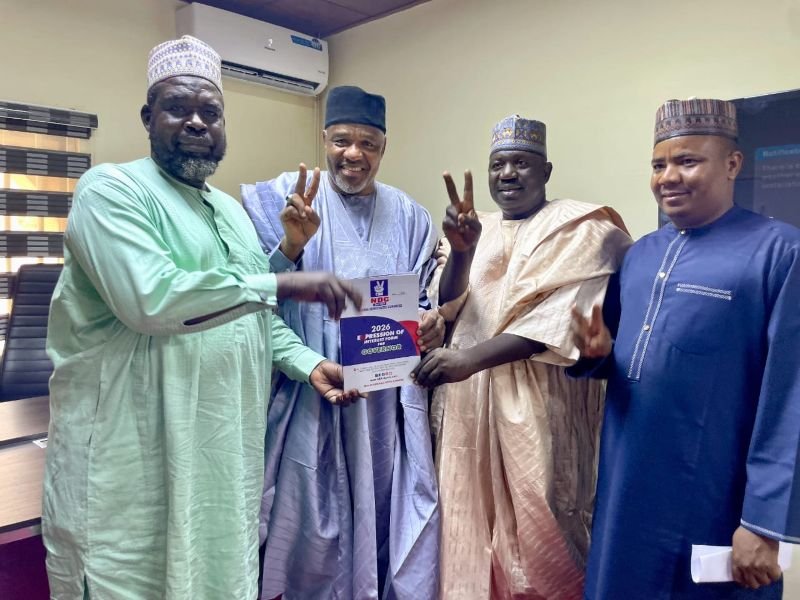
BAUCHI, NIGERIA — The iNews Times | Bauchi NDC governorship candidate Ibrahim Muhammad Kashim has resigned from the Nigeria Democratic Congress https://ndcnigeria.com withdrawing from the party that had already presented him as its standard-bearer for the 2027 general elections.
In a formal letter dated October 16, 2026, and addressed to the NDC chairman in Bauchi Local Government Area, Kashim announced that his decision followed careful personal reflection and was not the product of any public dispute.
In this report, we examine the key developments, reactions from stakeholders, and the broader implications.
Background of the Story
The Nigeria Democratic Congress remains one of the smaller registered parties seeking to expand its footprint ahead of the 2027 polls. In Bauchi State, a competitive northern battleground where the APC and PDP have long dominated, the NDC had moved early to name Kashim as its governorship candidate in a bid to project organisational readiness. His selection was viewed by party insiders as an attempt to present a fresh face capable of attracting undecided voters in a state still recovering from successive cycles of intense political rivalry.
Key Developments
Kashim’s resignation letter, obtained by The iNews Times, is unambiguous. “I hereby formally tender my resignation from the National Democratic Congress (NDC), effective from the date of this letter,” he wrote. He described the move as “a matter of personal choice” and expressed appreciation to the party leadership and members “for the opportunity to have been associated with the NDC.” He requested that his resignation be formally acknowledged and that party records be updated accordingly.
The letter was submitted only days before this report and has already begun circulating among political stakeholders in Bauchi. At the time of writing, the NDC had not issued an official public response or named a replacement candidate.
Reactions from Stakeholders
A senior NDC official in Bauchi, who spoke on condition of anonymity because he was not authorised to speak publicly, described the development as “unexpected but not entirely surprising given the fluid nature of political alignments at this stage of the cycle.”
Political analyst Dr. Amina Yusuf, who tracks northern politics, told The iNews Times: “When a governorship candidate walks away this early, it signals either deep internal dissatisfaction or a calculated repositioning. The NDC now faces the immediate task of stabilising its structure in Bauchi or risking further erosion of credibility.”
Local observers note that Kashim has not yet indicated whether he intends to join another party or remain independent in the coming months.
Implications
The resignation of the Bauchi NDC governorship candidate removes one of the few early named contenders from a smaller party and underscores the volatility that still characterises pre-election alignments more than a year before the 2027 polls. For the NDC, the exit raises questions about its capacity to retain high-profile figures and project seriousness in a state where voters traditionally gravitate toward established platforms.
More broadly, the development feeds into a familiar Nigerian pattern in which early nominations by minor parties are often followed by rapid recalibrations as aspirants weigh their realistic chances against larger platforms. It also places pressure on the Independent National Electoral Commission and party structures to maintain accurate candidate records as the formal nomination window approaches.
What Happens Next
The NDC is expected to convene its Bauchi State leadership in the coming days to acknowledge the resignation formally and begin consultations on a possible replacement. Kashim himself has not yet spoken publicly beyond the letter, leaving open the possibility that he may surface with a new political platform. Party officials and political watchers will be monitoring whether other early candidates in smaller parties follow a similar path as the 2027 race intensifies.
Conclusion
Ibrahim Muhammad Kashim’s quiet but decisive exit as Bauchi NDC governorship candidate has injected fresh uncertainty into the state’s emerging political landscape. While framed as a personal decision, the resignation highlights the fragile foundations on which many smaller parties are still building their 2027 strategies. How the NDC responds in the weeks ahead will determine whether this episode remains an isolated setback or becomes an early warning of deeper organisational challenges.