First Niger Bridge Closure: FRSC and NSCDC Deploy Personnel Across Onitsha to Manage Traffic.
Anambra and Delta states brace for two weeks of restricted movement as emergency maintenance begins on the vital crossing.
ONITSHA, NIGERIA — The iNews Times | The Federal Road Safety Corps https://frsc.gov.ng and the Nigeria Security and Civil Defence Corps have deployed personnel to strategic locations in Onitsha and its environs ahead of the First Niger Bridge closure scheduled from September 7 to 21, 2026. The joint action aims to maintain order, reduce congestion and protect road users during the emergency works.
Officials from both agencies confirmed the move on Sunday following a coordinated road audit, describing it as a proactive step to keep traffic flowing through alternative routes while engineers carry out necessary repairs on the ageing structure that links Anambra and Delta states.
In this report, we examine the key developments, reactions from stakeholders, and the broader implications.
Background of the Story
The First Niger Bridge remains one of the busiest transport corridors in southern Nigeria, carrying heavy volumes of commercial and private vehicles between the commercial hub of Onitsha and Asaba. Decades of intense usage have placed continuous strain on the structure, prompting periodic maintenance that often disrupts daily life and trade. Previous closures have tested the capacity of traffic managers and security agencies, making early planning essential. The current two-week shutdown was announced to allow urgent repairs, with authorities determined to avoid the chaos that has accompanied similar interventions in the past.
Key Developments
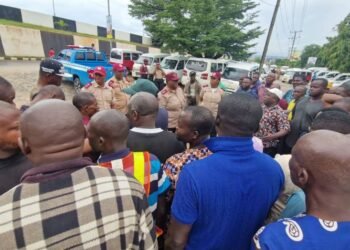
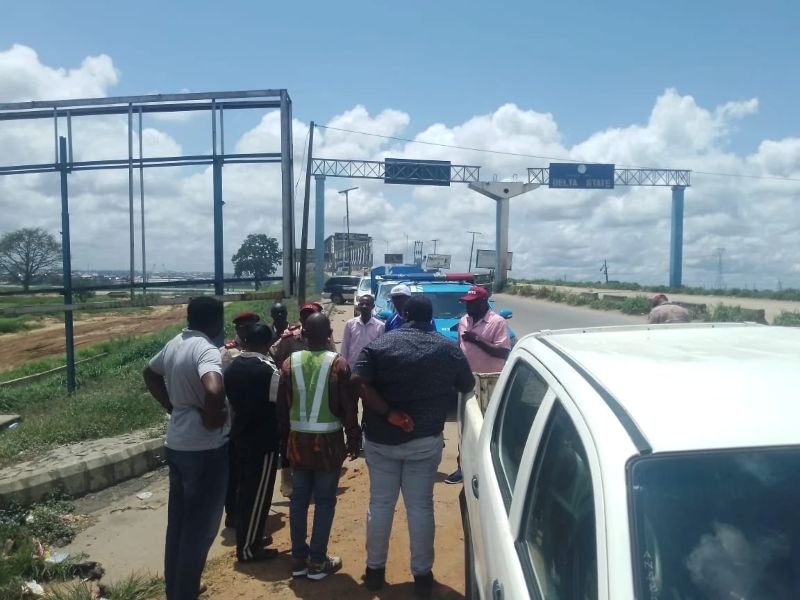
On Saturday, the Sector Commander of FRSC RS5.3 Anambra, Corps Commander Bridget Asekhauno, led a working visit and road audit around the bridge approaches and connecting routes. She was joined by the Sector Head of Operations, the Controller of the Federal Ministry of Works in Anambra, Emenike Timothy, his Delta State counterpart, and the Commander of the Anambra State Traffic Management Agency. The audit assessed major alternative corridors and identified points that require immediate attention to prevent gridlock and reduce crash risks.
Following the exercise, Sector Public Education Officer Margaret Onabe announced that FRSC personnel have been positioned at critical junctions. Motorists have been directed to use the Nkpor–Old Road–Obosi route, the Onitsha–Owerri Road from Upper Iweka, and the Atani Road through Uga Junction to the Harbour Industrial Layout as primary diversions linking to the Second Niger Bridge.
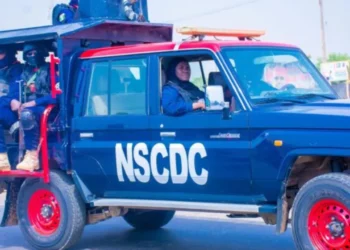
On the security side, the NSCDC Anambra Command has mobilised both tactical and regular officers to the bridge site and surrounding areas. Head of Media and Tactical Operations Okadigbo Edwin stated that the deployment covers 24-hour protection for engineers, equipment and the infrastructure itself, in line with the Corps’ mandate to safeguard critical national assets.
Reactions from Stakeholders
Margaret Onabe emphasised the collaborative nature of the operation. “The Sector Commander assured the public that the FRSC, in collaboration with other traffic management agencies and relevant stakeholders in Anambra and Delta States, is fully prepared to manage traffic and respond promptly to emergencies throughout the period,” she said. She urged motorists to plan journeys carefully, obey traffic directives, avoid unnecessary parking and refrain from dangerous driving.
Okadigbo Edwin was equally firm. “Consistent with our statutory responsibility, we have mobilised armed and unarmed officers to provide 24-hour security for the engineers, equipment and the bridge infrastructure throughout the repair period. We are also working closely with other security agencies to ensure a hitch-free operation. We urge residents and road users to remain patient and law-abiding. Anyone found vandalising government property or obstructing the contractor handling the project will be arrested and prosecuted accordingly.”
Implications
The First Niger Bridge closure carries significant economic and social consequences for the South-East and South-South. Onitsha’s vast markets depend on steady cross-river traffic for the movement of goods. Extended delays could raise transport costs, disrupt supply chains and strain small businesses that rely on daily turnover. Commuters face longer travel times, while security presence will be heightened to deter opportunistic crime and vandalism around the worksite. Smooth coordination between Anambra and Delta authorities will be critical to preventing secondary congestion on the Second Niger Bridge and its approach roads.
What Happens Next
Works are expected to commence on Monday, September 7, and continue until Monday, September 21. FRSC and NSCDC personnel will remain on continuous duty, supported by the Anambra State Traffic Management Agency and counterparts from Delta. Motorists are advised to leave earlier than usual, follow designated diversions and remain patient at control points. Authorities have indicated that emergency response teams will be positioned to clear incidents quickly and keep alternative routes open.
Conclusion
The coordinated deployment by the FRSC and NSCDC underscores the seriousness with which agencies are approaching the First Niger Bridge closure. With proper public cooperation, the two-week period can pass with minimal disruption. The iNews Times will continue to monitor developments and provide updates as the maintenance progresses, ensuring readers receive accurate information on traffic conditions and safety measures across the Niger corridor.