Federal Government Evacuates Second Batch of Nigerians from South Africa.
Tinubu Administration Accelerates Repatriation as Xenophobic Violence Forces More Citizens Home.
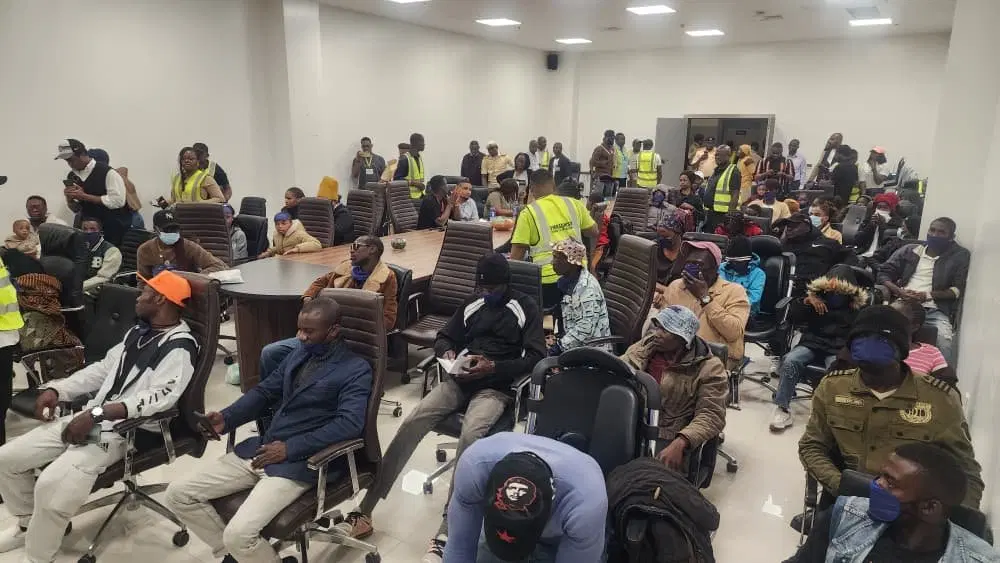
LAGOS, Nigeria – The iNews Times | The Federal Government of Nigeria has successfully evacuated another 66 citizens from South Africa in the second batch of returnees fleeing xenophobic attacks, with the group landing at the Lagos International Airport on Wednesday night.
This latest operation forms part of President Bola Tinubu’s approved evacuation exercise aimed at safeguarding Nigerians caught in the escalating violence in South Africa, demonstrating the government’s commitment to protecting its citizens abroad.
In this report, we examine the key developments, reactions from stakeholders, and the broader implications.
Background of the Story
Xenophobic attacks targeting African migrants, particularly Nigerians, have been a recurring nightmare in South Africa for years, often triggered by economic frustrations and political rhetoric. Previous waves of violence led to loss of lives, destruction of businesses, and widespread fear among the Nigerian diaspora. The current exercise follows the arrival of the first batch of 258 evacuees on June 11 aboard a chartered Air Peace flight, underscoring a sustained effort to bring stranded nationals home.
Key Developments
The second batch of Nigerians evacuated from South Africa arrived safely under coordinated arrangements involving the Nigerians in Diaspora Commission (NiDCOM) https://nidcom.gov.ng and support from private aviation stakeholders. The returnees were accompanied by officials of the Nigerian High Commission in South Africa https://www.nhcpsa.org, with logistics facilitated by Kunle Soname, Chairman and Chief Executive Officer of ValueJet https://www.flyvaluejet.com.
The Ministry of Foreign Affairs is actively addressing logistical challenges encountered during the initial evacuation to ensure smoother operations moving forward.
Reactions from Stakeholders
Dipo Onabowale, Head of NiDCOM in Lagos, who spoke on behalf of Chairman Abike Dabiri-Erewa, commended President Bola Tinubu for his swift approval of the evacuation exercise. “There are 66 people in the second batch. Logistical challenges encountered during the first evacuation exercise are being addressed by the Ministry of Foreign Affairs,” Onabowale stated.
He further revealed that Foreign Affairs Minister Bianca Odumegwu-Ojukwu has assured that all registered Nigerians in South Africa who wish to return would be evacuated.
Implications
The ongoing evacuation of Nigerians from South Africa highlights deep strains in bilateral relations between the two nations, even as economic ties remain significant through trade and investments. For affected families, the return brings relief but also economic uncertainty, as many returnees may have lost properties and livelihoods. On a wider scale, it raises questions about long-term diplomatic strategies to combat xenophobia and protect Nigerian interests in the region, while testing Nigeria’s capacity to manage large-scale repatriation and reintegration programmes.
What Happens Next
Authorities anticipate additional batches of returnees as registration and logistics are streamlined. The Federal Government is expected to provide support for reintegration, including potential skills programmes and financial assistance for returnees. Diplomatic engagements between Nigeria and South Africa are likely to intensify to address root causes of the violence and prevent future incidents.
Conclusion
As more Nigerians evacuated from South Africa arrive home, The iNews Times remains committed to following this critical story and its impact on citizens and national diplomacy. President Tinubu’s decisive action sends a strong message of leadership and care for Nigerians in distress, reinforcing the need for sustained regional cooperation to tackle xenophobia and ensure the safety of African migrants across the continent.